Evacuation & (Re)adjustment

Hello everyone! As many people know by now, Peace Corps was evacuated and suspended worldwide. My service was officially closed on March 20, 2020 (about 20 months earlier than expected). To say that my service was cut short would be a bit of an understatement.

I had only been back at site for a month since the completion of my In-Service Training (IST). I had planned my first large-scale training for March 26. I had just established the groundwork to start two new gardens in my community over the next six months–one at the local middle school and one with a women’s group. I had also begun discussions with the local middle school for a girls’ scholarship program I was going to apply for for the upcoming school year. I had several cultural topics outlined that I wanted to discuss on this blog over coming months, including events and ceremonies, food, religion, the different Senegalese ethnic groups and languages, and clothes and beauty standards.
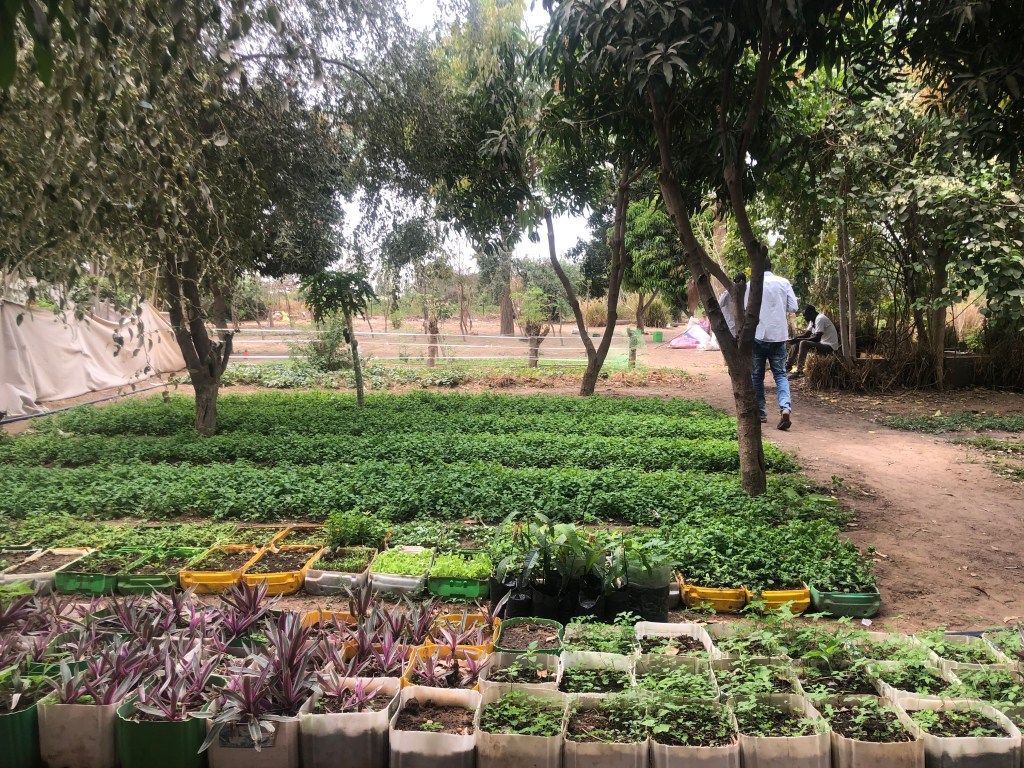
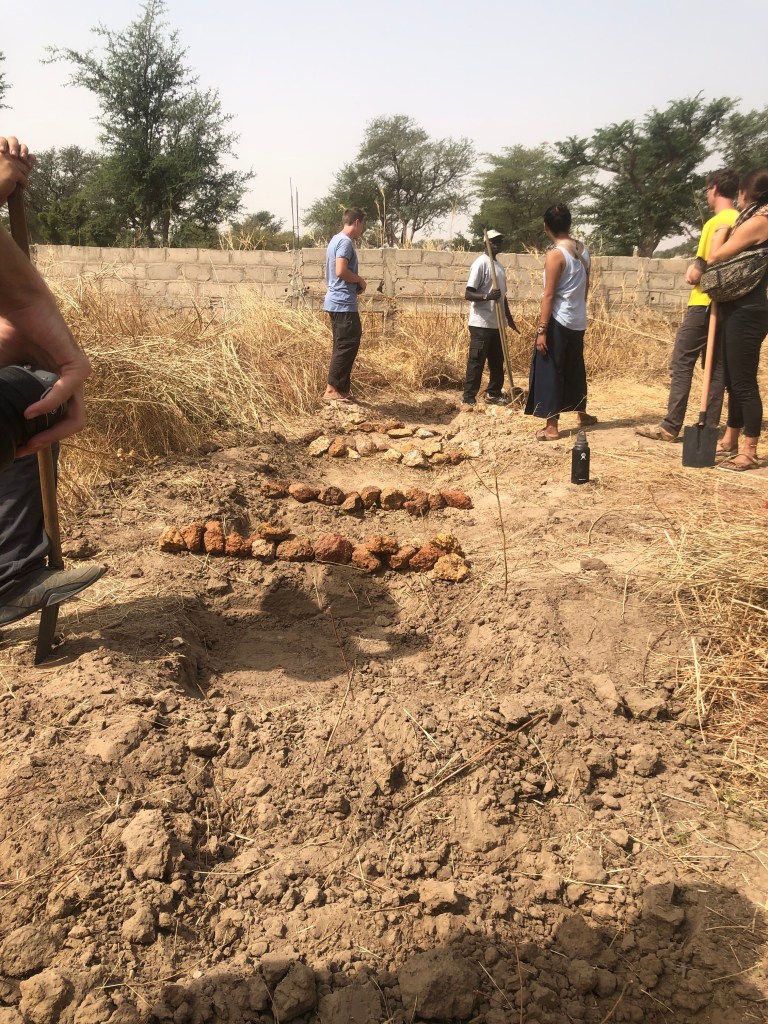
During IST, we visited Master Farms in Thies region. Master Farmers are farmers that Peace Corps has official partnerships with to collect agricultural research, serve as trainers for other local farmers, and to partner with volunteers.
This is another Master Farm we visited. We learned about a variety of earthworks tools we could use and extend.
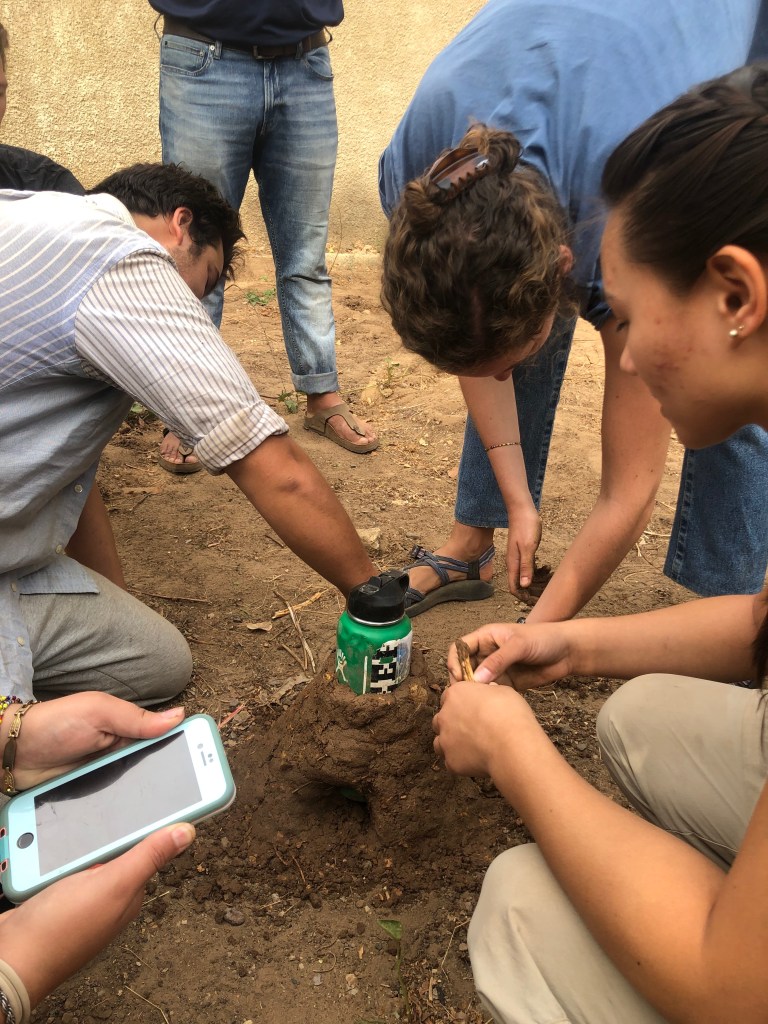
We learned how to construct mudstoves. Peace Corps Senegal loves to extend mudstoves because they help women to cook more effectively and healthily.
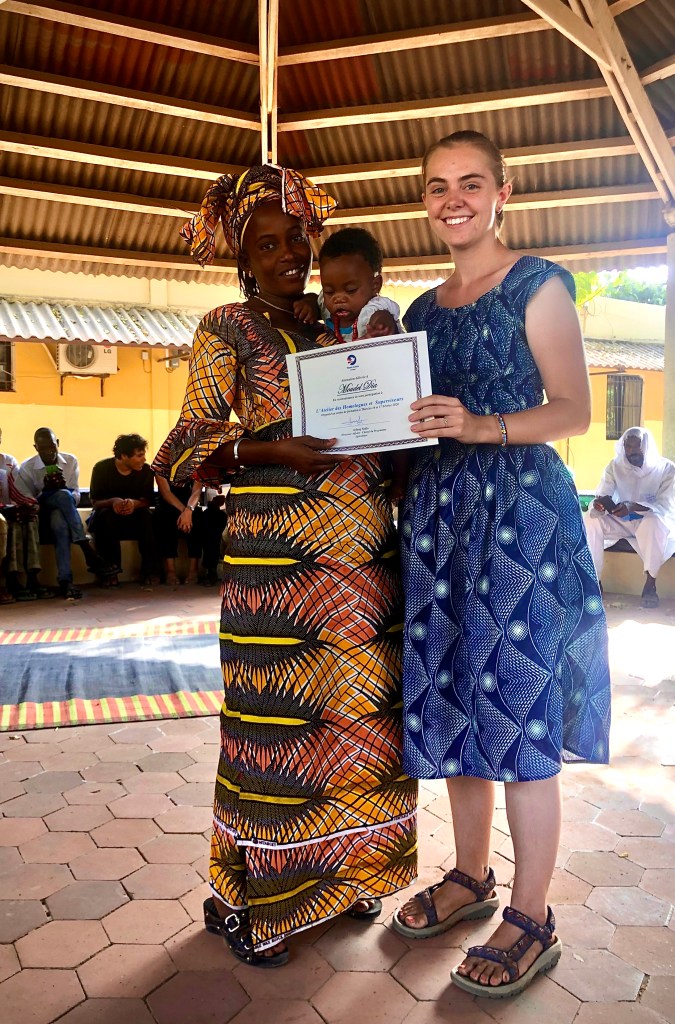
During IST, we had a short counterpart workshop. This is my local counterpart Moudel Dia with her seven month old Jaineba. She is the president of a women’s group and manages a large scale garden with about 40 women from her group.

On a more personal note, I had finally begun to find my routine and place at my site. I was feeling more confident and had found happiness at site. I was starting to feel professional success and that I had a purpose at site. I also had established a routine to include time for yoga and meditation as well as for reading and creating artwork. My boyfriend also came to visit Senegal at the end of IST to celebrate our two-year anniversary. It definitely rejuvenated me. This served as a sharp contrast to my mindset both prior and during IST.

For the month of February, I was really struggling emotionally and psychologically with my service. I had been violently ill three times for days at a time over six weeks at site prior to IST, I had friends who were working in development work with a much larger paycheck, access to more amenities, and more freedom, and I was feeling very alone and isolated. Additionally, during our IST, two volunteers were attacked by six men with machetes only a block away from our training center. I had been walking with those volunteers right before the attack, but I walked ahead with other friends as they stopped to smoke cigarettes. (I will note both of the volunteers are okay and have received medical attention.) Multiple volunteers in my training cohort had been robbed with one volunteer even having her room broken into it at night while she was sleeping. All of this made me question why I was in Senegal. I did not feel like I was making enough impact to justify the hardship I was going through.

But then, I returned to my site. I got back to site as the sun was setting, and I saw the night sky emerging. I wish I had a camera powerful enough to capture the beauty of the night sky in the middle of the Senegalese savannah with no light pollution. When I entered my family compound, I was welcomed with hugs and excitement from my family. They were so overjoyed to have me home after almost a month away. My local counterpart, who I had clashed with during counterpart workshop at IST, was happy to see me too. She immediately invited me to join her at a wedding after I returned to site. We spent seven hours at this wedding together, and when I returned home, she told me how happy she was that I came and introduced me to everyone as sehilam (“my friend”). We visited several gardens in my community together, and women approached me with questions about pests and diseases on their produce. I met with school officials about the school garden, discussed a scholarship program for impoverished but high-performance middle school girls, and gained permission to paint a mural for International Women’s Day about women in careers. I approached the Senegalese Forest Service and my counterpart about a training I wanted to hold for women in the community about compost, seed selection and storage, utility of different tree species, and establishing a tree nursery. We had started planning and began inviting women. I was feeling confident. I had finally begun to feel my purpose as a volunteer. I could make an impact here even with my broken language skills and learning as I went along.
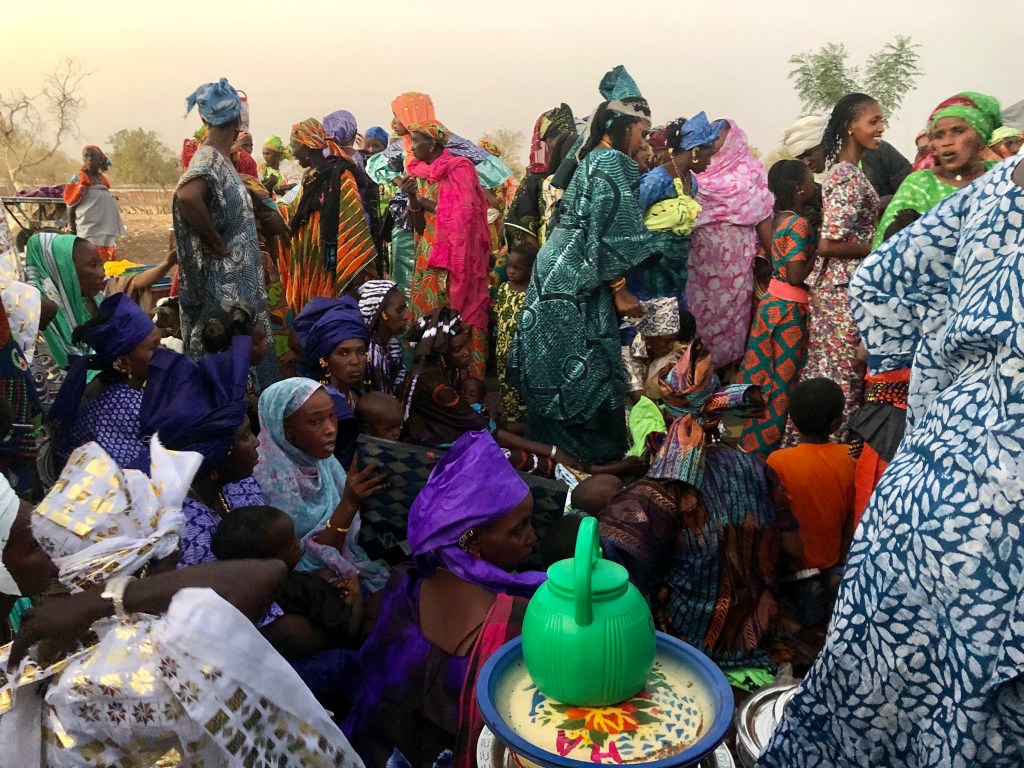
This is from the wedding I attended with my counterpart Moudel. As part of the celebration, there is essentially our equivalent of a bridal shower. The women give money, household goods, fabric, and food to prepare a woman for starting her new role as a wife.

…and then came the news that we could no longer travel internationally (March 13). The next day (March 14) Peace Corps offered volunteers worldwide the option of Interrupted Service. Interrupted Service essentially means that your service is ended because of matters outside of your control. I spent almost the entirety of the 14th and 15th on my phone, talking to family members and other volunteers about my options and my decision–I am going to stay in Senegal for as long as I can. My parents echoed that they believed this was the best decision for me. But it also was clear by this point–we were going to be evacuated.

Evacuation seemed inevitable at this point–a question of when, not if. I believe by the 15th around seven or eight Peace Corps posts had been evacuated or had evacuation orders. This now included Morocco, which is where West African volunteers are evacuated for medical emergencies. The country had announced it was closing its borders. Senegal was now one of the countries that other countries were not allowing flights from. Cases in Senegal had reached in the double digits. (In the most recent report, Senegal has reported 190 cases with 45 recovered and 1 death.) I spent the night of the 15th crying on the phone with my boyfriend and packing most of my belongings after realizing that my service was going to end sooner rather than later. The morning of the 16th Peace Corps announced that they would be suspending activities and evacuating volunteers worldwide.
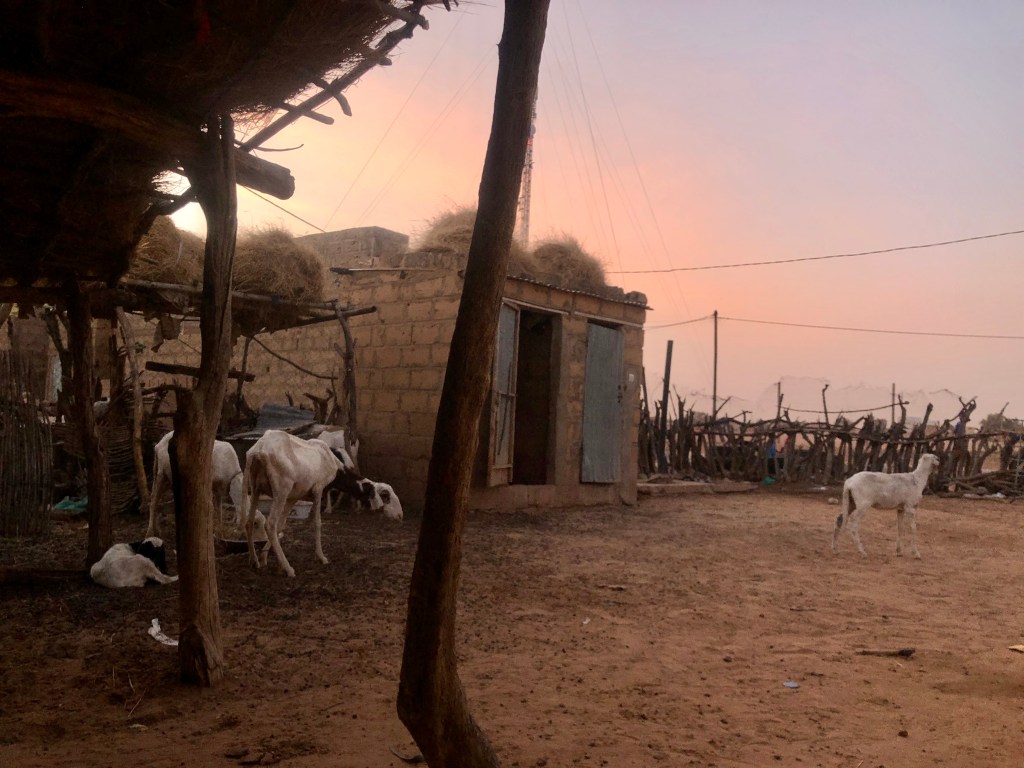
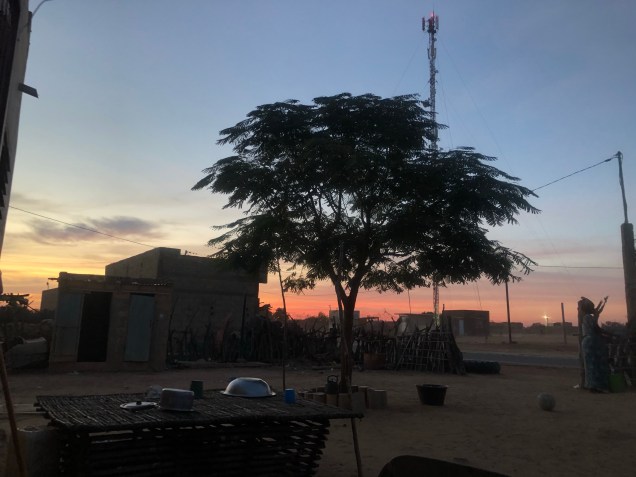
The sunset view from my compound on March 16. All of my family’s sheep have returned from going out for the day and are eating some leftovers.
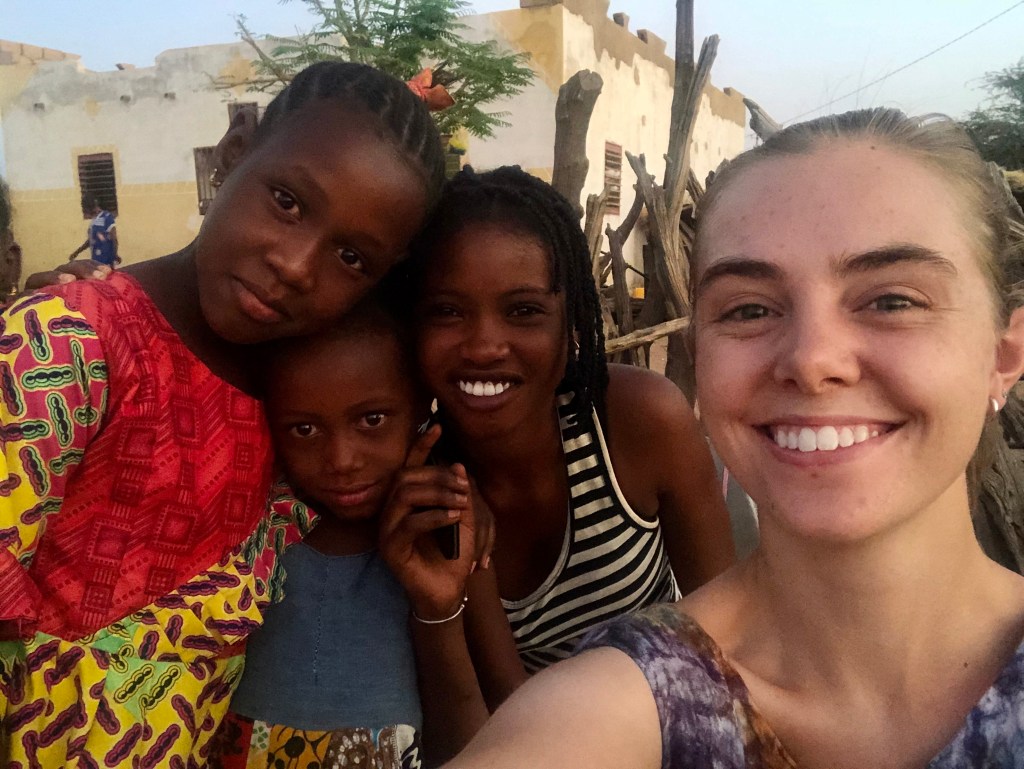
I went and sat with my sisters (left to right: Hoole, Oumou, and Hawa) to enjoy the sunset views as they sang songs and acted silly.

I immediately left my room at 7 am still in pajamas and saw my host dad and one of my moms. I told them that Peace Corps says I have to leave Senegal and go back to the US. I did not know when I would have to leave, but it would be soon. I went back to my room to collect myself and call my family members. The first person I left to tell was my local counterpart. I told her I was going back to the US because Peace Corps says I have to because of coronavirus. I gave her all the seeds and tools that I had planned to use at the training in ten days to give to other community members. I expressed how sad I was and that I hope to return after things improve. She requested we take pictures together, and she took off the silver bracelet she was wearing and put it on my wrist. My site mate and I then visited the Senegalese Forest Service office to tell them that we would be leaving. My site mate, using his French, established some framework with them to be used with the volunteers who would follow us at our site. After that, the waiting game began.
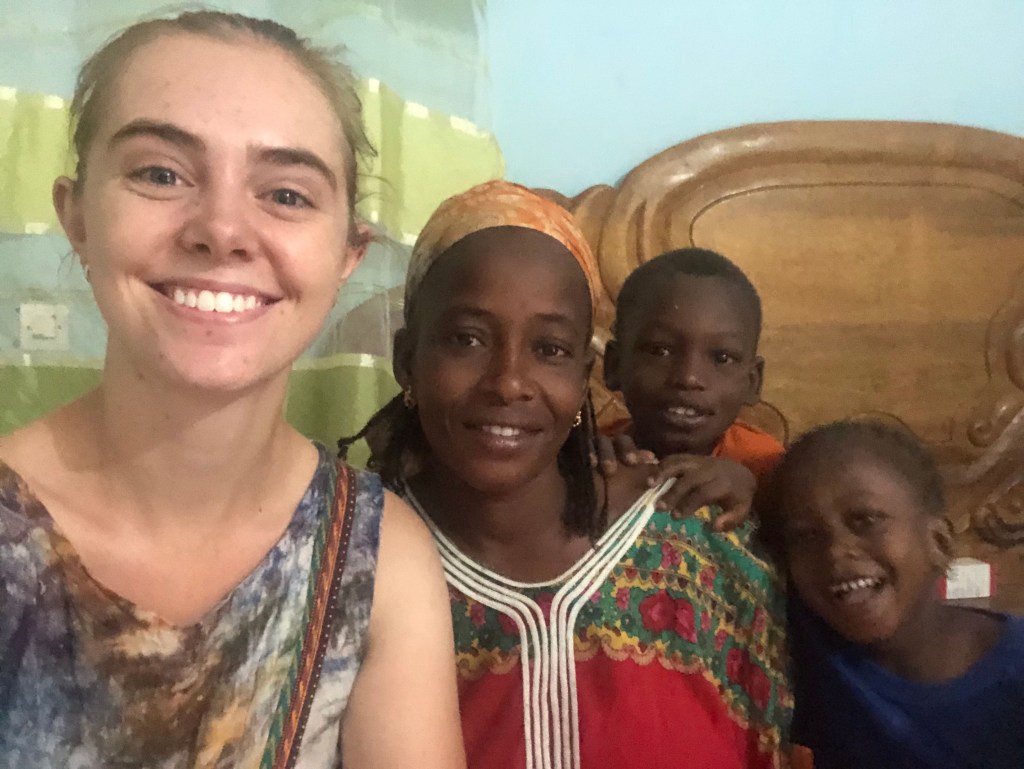
This is me with my counterpart Moudel and her children as I was saying my goodbyes to her.
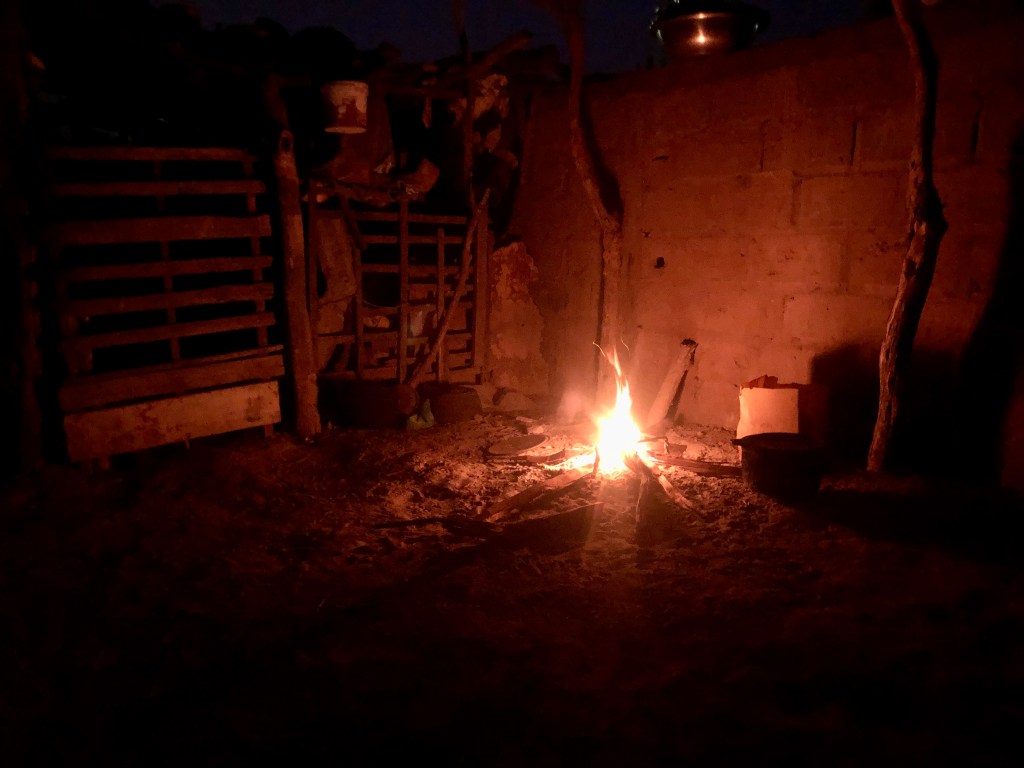
Enjoying one of my last nights having dinner cooked over the fire.
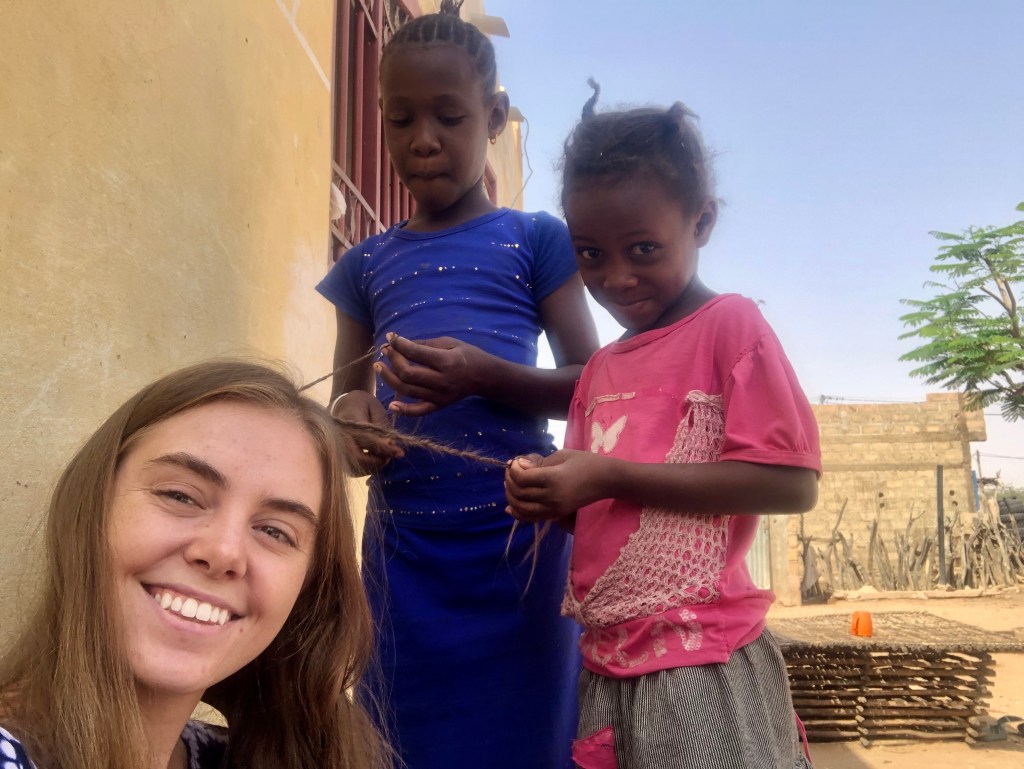
On my last full day at site, I let my sisters finally braid my hair.

Volunteers were initially told that the evacuation would be happening in waves over two weeks. This quickly changed. All of the volunteers were consolidated at regional cities or volunteer sites by Wednesday the 18th. My consolidation point was my own site, so I had one extra night at site compared to others. My last days were spent reading books, mood swings between sadness, anger, and anxiety, packing and, most importantly, spending time with my family. On the morning of Thursday the 19th, I said my final goodbyes to my family. I told them that I will come back. I do not know if I will do so as a volunteer, but I will come back to Senegal and to them. As I hugged them all and started to cry, I got into the bus scheduled by Peace Corps and, with 22 volunteers, headed to Thies. Peace Corps Senegal had consolidated over 300 volunteers to leave on Sunday the 22nd and to hold a Close of Service conference for all of us over three days. This, of course, changed. The Senegalese government announced it would be closing its airspace on Friday the 20th at midnight. We woke up on Friday morning to the news that our conference was now two-hours to be told our medical requirements upon return to the States and to fill out administrative paperwork before we would be flying out at 7pm that night on a chartered flight. Over seven waves during the afternoon, all the volunteers were at the airport and checking-in. The waiting game continued in the airport for a couple hours. We started boarding around 7pm, and most of us waited in the airplane for the final volunteers and a US Embassy family. We finally took off around 9pm. We landed at an eerily empty Washington Dulles airport at 2am on Saturday March 21st. My boyfriend who had also been evacuated (he is a Foreign Service Officer posted to China) picked me up at the airport, and we moved into an apartment in downtown DC. The past 12 days have been hard. It has been an emotional rollercoaster coming to terms with essentially the abrupt end of my service, coming back to the US in lockdown, looming unemployment and financial insecurity, and normal culture shock after service. But I am lucky. I had a place to come back, a space to have support from a loved one, the ability to cook for myself again, and continuing to indulge in my art. This is not the case everywhere.
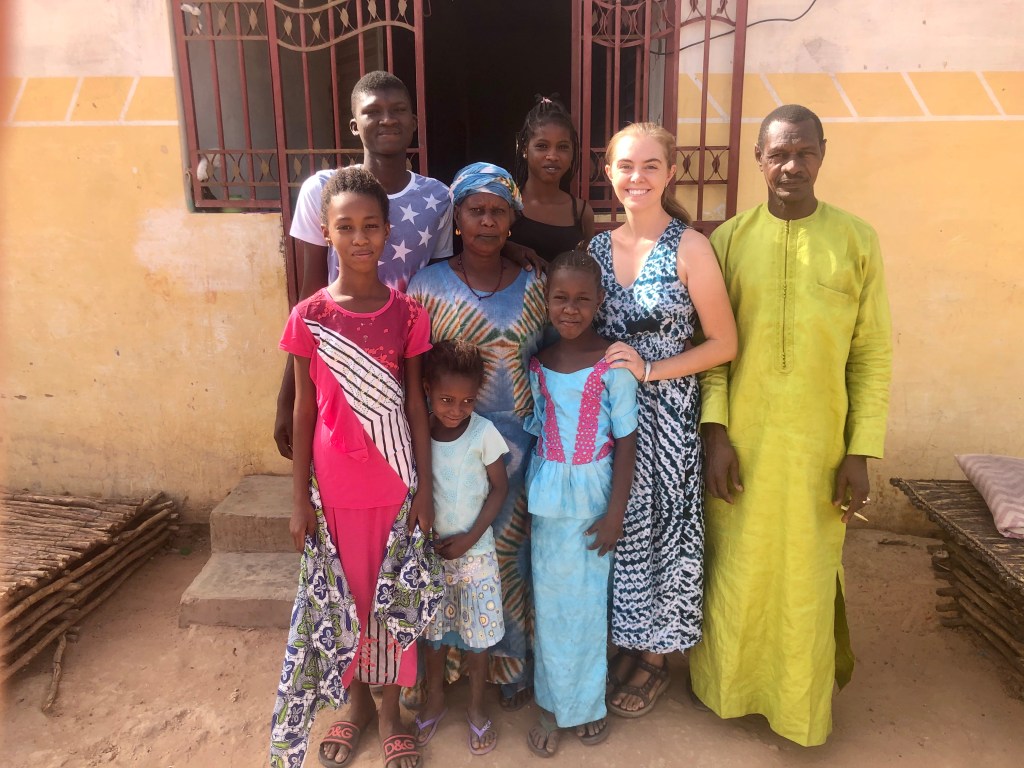
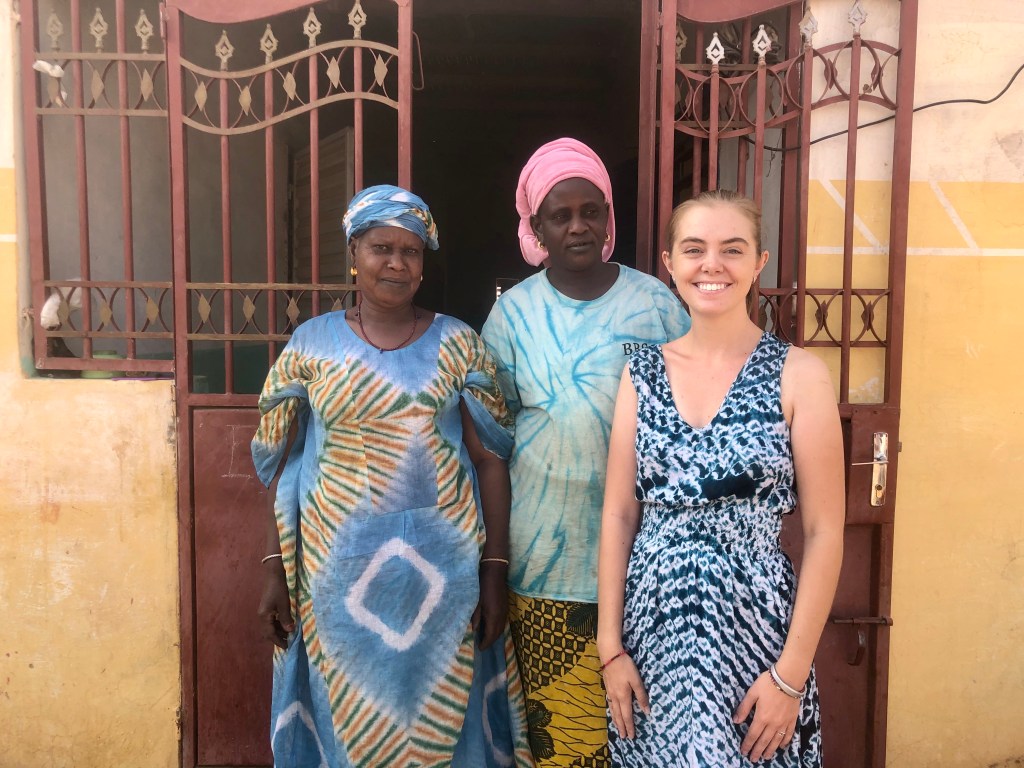
This picture was taken as I was preparing to leave my family. These are only a few of my family members with multiple of my siblings not home at the time. But they have all made an impact on me. Left to right: Faty, Oumou, Faty, Hawa, Hoole, and Sara
These are my two moms–Faty and Hoole–who have cared for me and fed me every day.
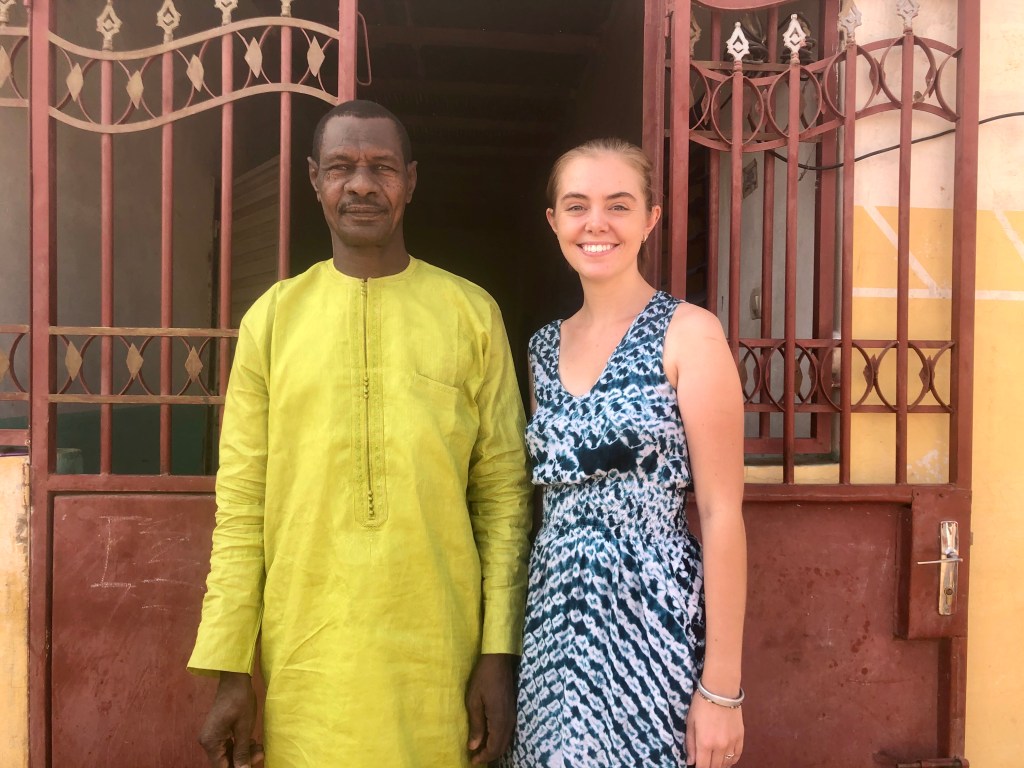
My dad–Sara Dia–has been probably the most supportive person in my whole service.
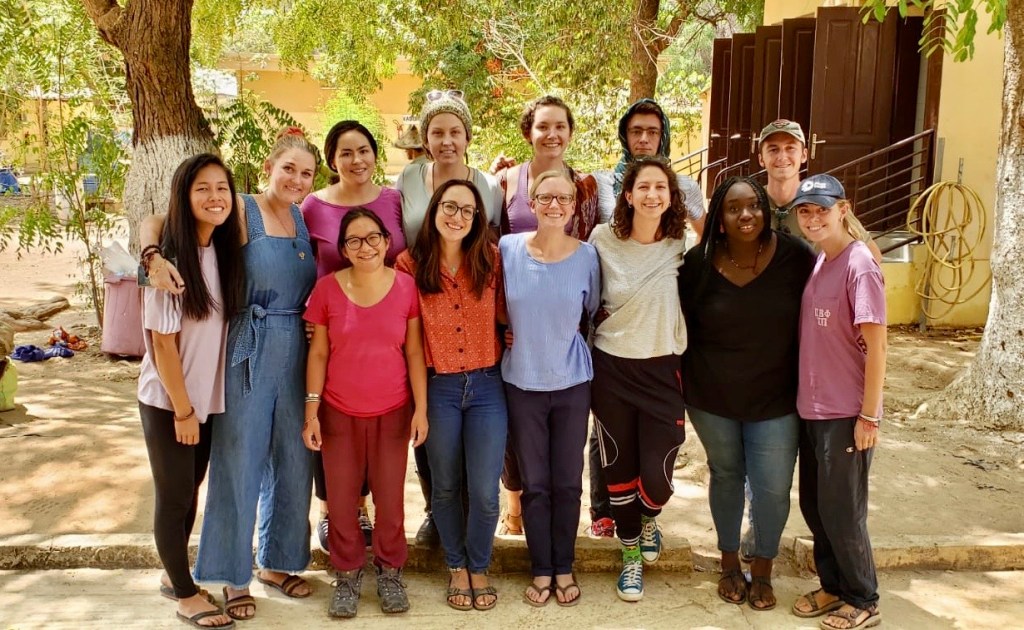
The volunteers of the Matam region at the Thies traing center as we prepare to get on the bus to go to the airport.
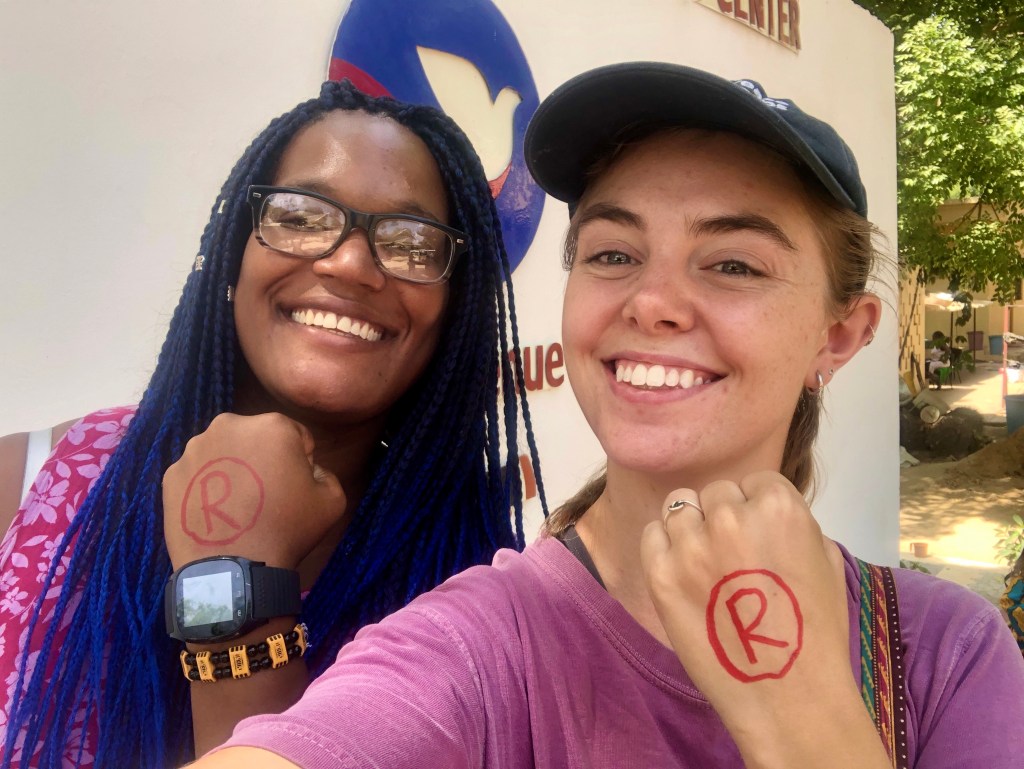
When volunteers finish their service, they get a red R stamp to symbolize they are a returned Peace Corps volunteer. We did not have a stamp so the volunteers all passed around a red sharpie to draw them on.
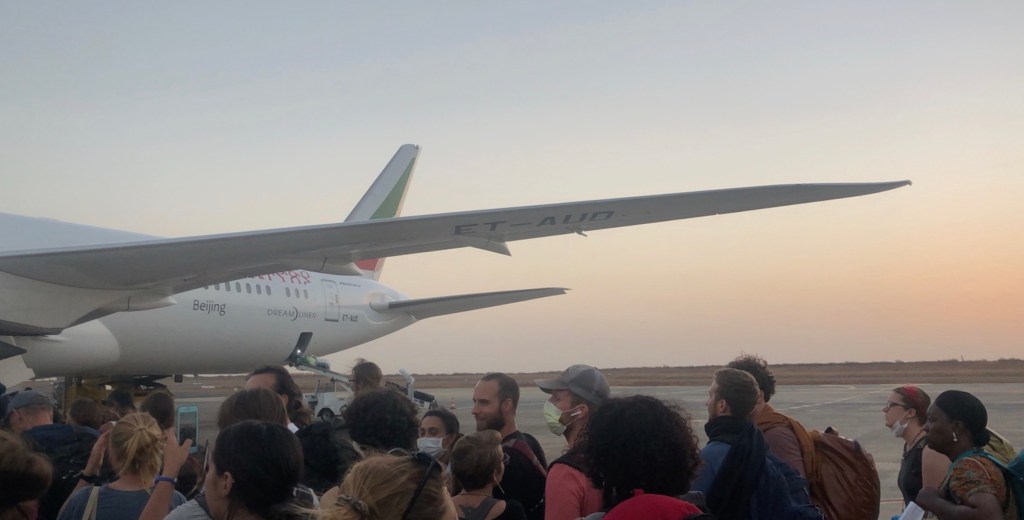
Volunteers as we board our chartered flight back to the US with the sun setting in the background.

The situation in Senegal has quickly escalated since I left the country. Schools and mosques have been closed for the foreseeable future. The government declared a state of emergency and has ordered a dawn-to-dusk curfew. Travel between regions has been shut down. Large gatherings, including weekly markets, have been cancelled. This last one is especially troubling. Weekly markets are the main source of income and food for many across Senegal. My family sells goods at the markets for money and purchases food for the week at them. Without the weekly markets, people will lose access to their income and will lead to increasing food insecurity. My host dad is the head of transportation through my town. With the inability for regional travel, he will lose his income. Additionally, for many children, they received meals through school, which they can no longer access. For most in Senegal, social distancing is not an option. I had a small compound with less than 20 people. Some compounds include four or five households each with 10 to 20 members. Food, household goods, and living situations are entirely communal. Few have their own bed–let alone bedroom. Quarantining and self-isolation is a privilege.

All of this is in a country that was on the forefront of testing. Senegal was one of two countries across the entire African continent who had testing capabilities prior to COVID-19 and was one of the leaders during the Ebola outbreak in 2014-2016. They trained dozens of countries how to test and provided them the resources to do so. They started building military hospitals and designated hospital areas for coronavirus. But expectations are that coronavirus could overwhelm the African continent. While the situation escalates in the US, remember that social distancing and the ability to undergo a lockdown is a privilege. Across the world, most do not have that option. Keep in mind my Senegalese family that is losing access to their income, education, and source of food in one wave. I miss them dearly, and when this ends, I will return to them. But, for now, I worry for them.
Gender

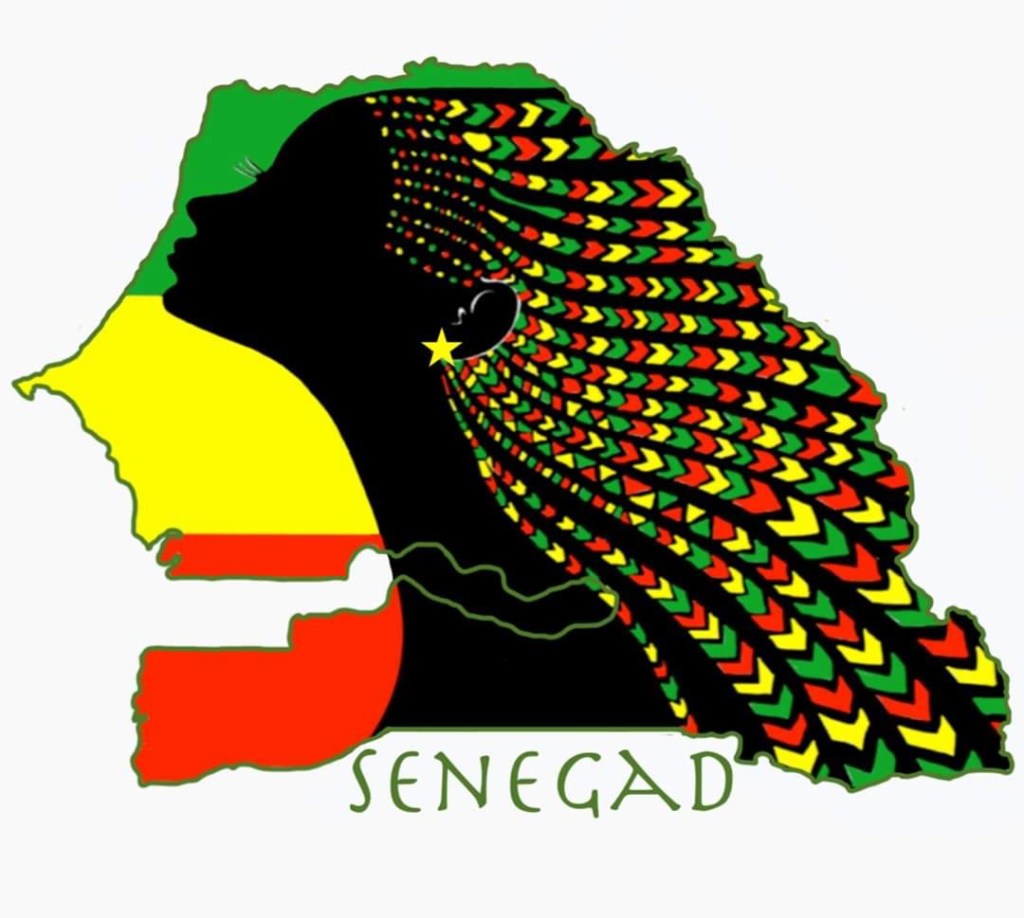
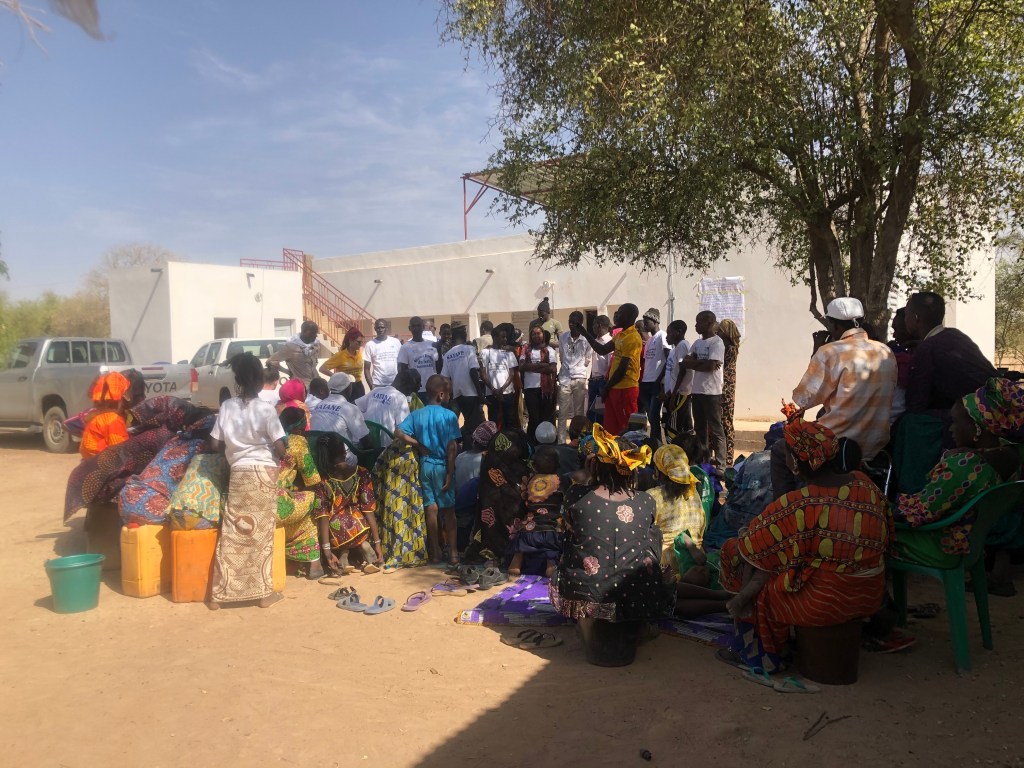
On March 8th, the entire world celebrates International Women’s Day. But here in Peace Corps Senegal, we celebrate women for an entire month with MarchGADness—a competition put on by Peace Corps Senegal’s Gender and Development committee, SeneGAD. Throughout the month, volunteers will compete to hold trainings, defy gender expectations, and share our experiences and activities across social media. I’m starting with a head start by winning this year’s logo competition. But I still hope to do a lot more work to highlight gender work in Senegal. To start, I wanted to share some of my observations about gender in Senegal.

The logo I designed for SeneGAD. The outline is Senegal’s borders with the colors of the Senegalese flag woven into the women’s braids and the flag’s star as her earring.

I want to start with noting that my observations will mostly come from experiences living in a Pulaar community. The Pulaar ethnic group is considered more conservative than other Senegalese ethnic groups and is entirely Muslim. From my brief time in major cities like Dakar and Thies, these observations are not necessarily the same as there are different ethnic groups, less conservative relationships between men and women, it’s more “Westernized,” and there is more wealth.

Polygamy & Marriage

As I’ve mentioned before, polygamy is common here with men being able to take up to four wives. In my family, there are two wives. I do want to stress that not every family partakes in polygamy. For instance, in my training family, there was only one wife. But, as my language teacher joked, “Your father is not a strong man. He can’t handle more than one wife.”

There are several reasons people engage in polygamy. For example, if a man’s first wife is unable to conceive children, he will often marry again. Not being able to have children can be very shameful and embarrassing for women here when women often have five to six children. My training mom had 11 children.

Additionally, if a woman is widowed, it is expected that she marry again because it is assumed that she cannot financially support herself and her children. The brothers of her deceased husband—who are often already married—will sometimes offer to marry the woman so that she stays in the family. When my language teacher’s husband died many years ago, her brothers-in-law offered this, but she refused. For some people in Senegal, this can be controversial, but it is something still practiced.

For others, polygamy can be a sign of status and wealth. According to the Quran, a man can have multiple wives as long as he treats them equally and can provide for them all. It is a sign that a man may be of wealth if he can show that he can provide for multiple households with multiple wives and many children.

Sometimes people ask about why a woman would agree to be in polygamous marriages. For many women, marriage is the only option. Many are uneducated (about half of Senegal—both men and women—is illiterate) and have very limited means of providing for themselves. Additionally, it is socially expected for women to marry—usually between the ages of 16-20 unless they go to university. Even if a woman goes to university, it is expected that it is a way to find a man to marry. Within the first minute of a conversation with someone new, I can expect to be asked if I am married or not. Marriage is not seen as optional but a necessity and expectation of all women in Senegal. The question is not will a woman marry but if she will be the only wife or not.

Gender Roles

As I mentioned, women usually marry in their late teens or early 20s. However, that is not true for men. Men usually marry in their late 20s. It is often emphasized that women are adults by 16, but men aren’t adults until they’re at least 26. One of the host brothers of a volunteer highlighted that even the male volunteers are still children while his volunteer sister and I are adults because of our ages.

My counterpart as well as multiple women have said to me before, “Being a woman hurts.” Chores here are much more laborious. Washing laundry by hand takes hours and, as I’ve learned from experience, can cause the skin of your hands to peel off. Being in a desert means a constant battle with dust and dirt covering everything you own. Additionally, cooking a single meal will take two to three hours easily of crushing, cutting, and stirring over the fire in 110 degree heat.

Women are expected to take on household duties and chores much younger. For instance, my middle school aged sister is beginning to take on more responsibility, sometimes cooking meals for the whole family. My sisters and moms take turns doing the entire family’s laundry. In my training family, my sisters were each assigned different takes with one sister in charge of all cooking and another sister managed all of the cleaning. My youngest sister—primary school aged—was beginning to do cleaning chores.

Women are able to work and seek employment. But, for most women, it is a means to make some money on the side, not a career. Women in my community sell unused produce from their gardens, have sandwich stalls, sell imported fabric, or make and sell refrigerated products. There are women with careers, such as my sister who is studying to be a pharmacist or the Peace Corps female local staff that are teachers, managers, or work in the administrative side. But that is not the rule, especially because these women I mentioned had access to a full education.

For schools here, each student has to pay tuition at the beginning of the school year. In families with multiple children and limited means, girls are the first to be cut from school. Sometimes the girls are needed at home to do household tasks. For instance, my training mom had several health issues so that is why my eldest sister managed the household. Also, not all villages have schools and sometimes have to go multiple villages over in order to attend school, so sometimes it is too logistically difficult for children to go to school. Even if a girl completes all her schooling, her family may not allow her or is unable to support her attending university. Most formal career paths I’ve seen required university and French-speaking ability. Additionally, around the completion of high school equivalent is the time period many women get married and start having children. It’s very normal for women to have their first child around 18.

On the reverse side of all of this, there is a very real expectation that men will provide for their families. A man’s income needs to cover his wife/wives and several children. My family has I believe 14 children. In my community, the vast majority of men work in animal husbandry, but there are other paths with a large government presence in my community (though most of these officials are not from Ranerou and often aren’t Pulaar), a whole street of stores and boutiques, and multiple schools. For instance, my dad manages the garage, which is where all transportation in and out of Ranerou comes through.

Additionally, many men leave Ranerou or even Senegal and work elsewhere, sending money back home to provide for their families. The Pulaar ethnic group comprises the majority of Senegal’s diaspora, providing wealth. Many stores owners in cities are Pulaar because they have the capital available from family overseas to invest in starting businesses or they do work with importing and trading.

While I am more aware of women’s issues and fighting for equality and equity, I’m aware that there is hardships on all sides and most do not benefit from the segregation and intense hierarchy of gender. As a volunteer, my job is not to judge or revolutionize the system or culture but, as I will do with my work this month, raise awareness, provide examples in contrast to the status quo here, and empower others to make the decision for themselves as to how they will live their lives. The observations I’ve provided on gender in Senegal are just a portion of my daily life here and what I’ve learned and experienced. If anyone has further questions about gender here, please feel free to reach out and ask questions.

At the end of the month, I will provide more updates on my work this month as well as other cultural insights. Haa gongol!

Transition

Hello everyone! It’s time for my monthly update! I continue to work on my language and integrating into my community. An unfortunate amount of time at site has been spent at my home because of various illnesses as my body adjusts to new bacteria and living conditions. But I have been trying to go out in the community when I can.

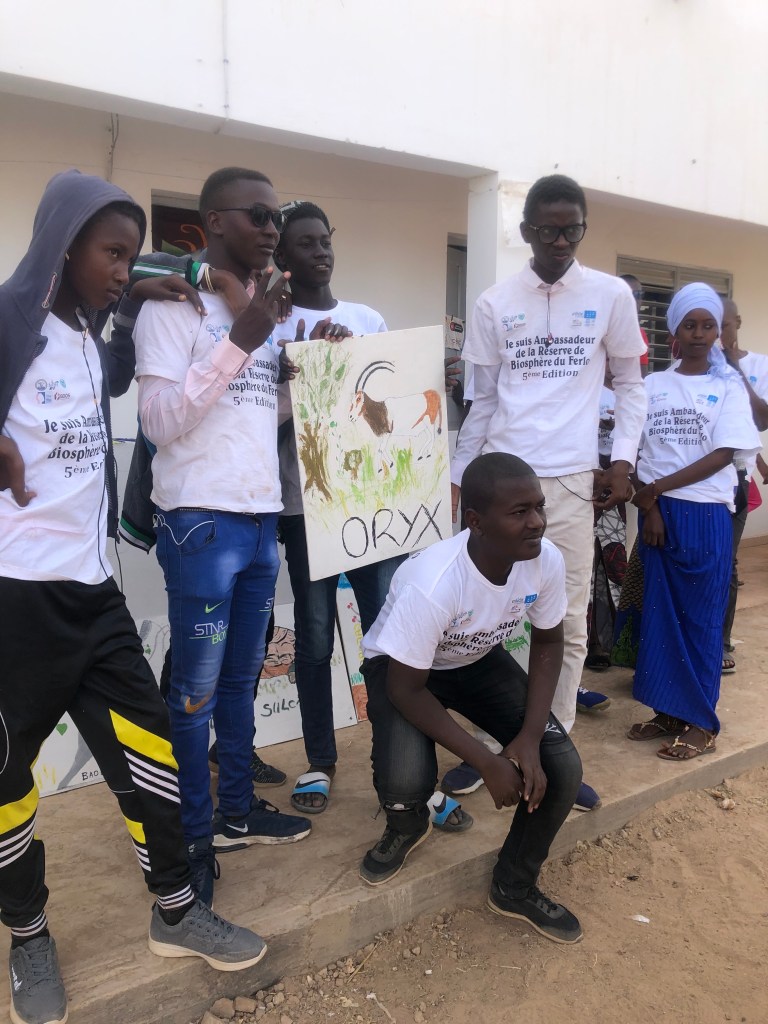
Right before the New Year, I was lucky enough to join a camp being held in the wildlife park located within the nature reserve that my town is in. About 20 high schoolers from nearby villages were invited to participate in five days of activities focused on environmental education and learning more about the wildlife park and its inhabitants. For the last night, the students spent the night within the park, and then for the last day, local officials visited where the students were. The students presented what they learned about each of the species located in the park, which was followed-up with a presentation on what the students committed to in preserving the local environment. It was amazing to see young people understanding the importance of the environment and taking initiative.

Students presenting their commitments to environmental preservation.
A few students with a painting they made of one of the species from within the park.
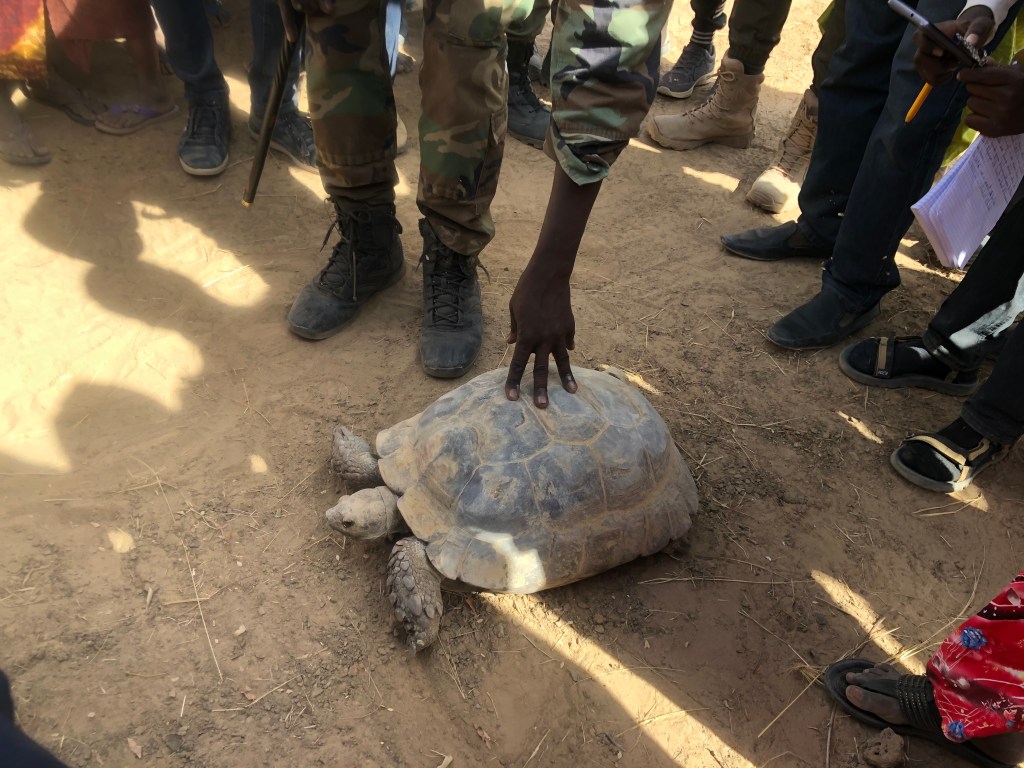
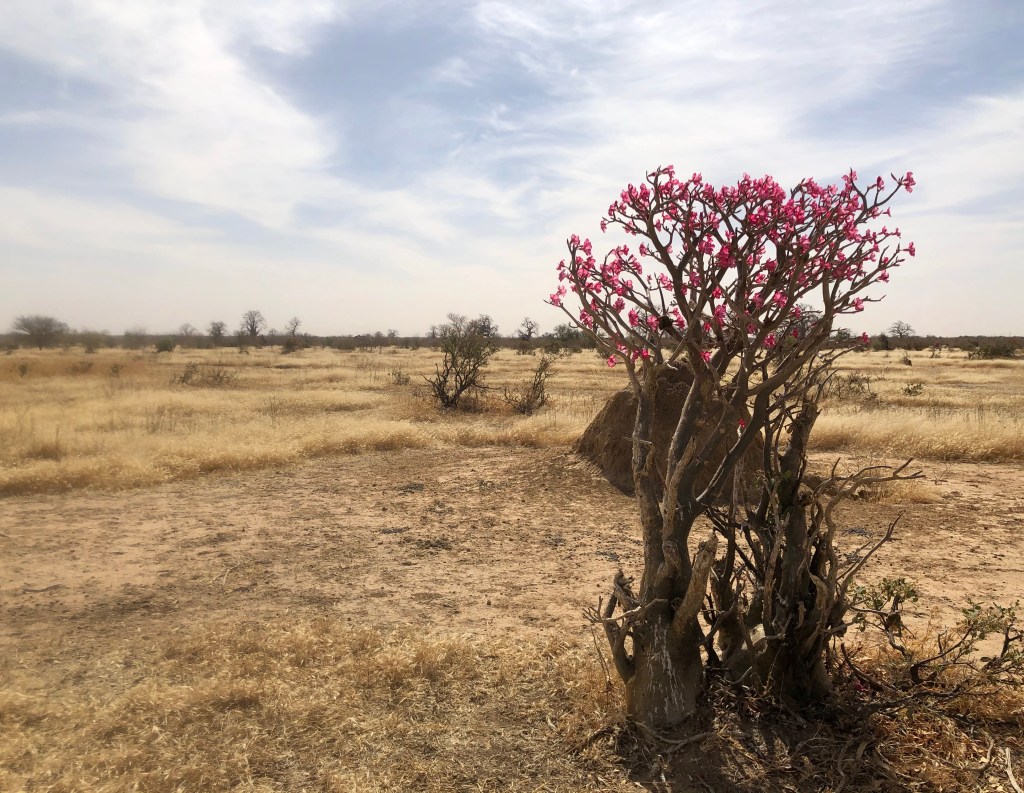
A tortoise (above) and baobab tree (below) we saw as we toured the wildlife park.

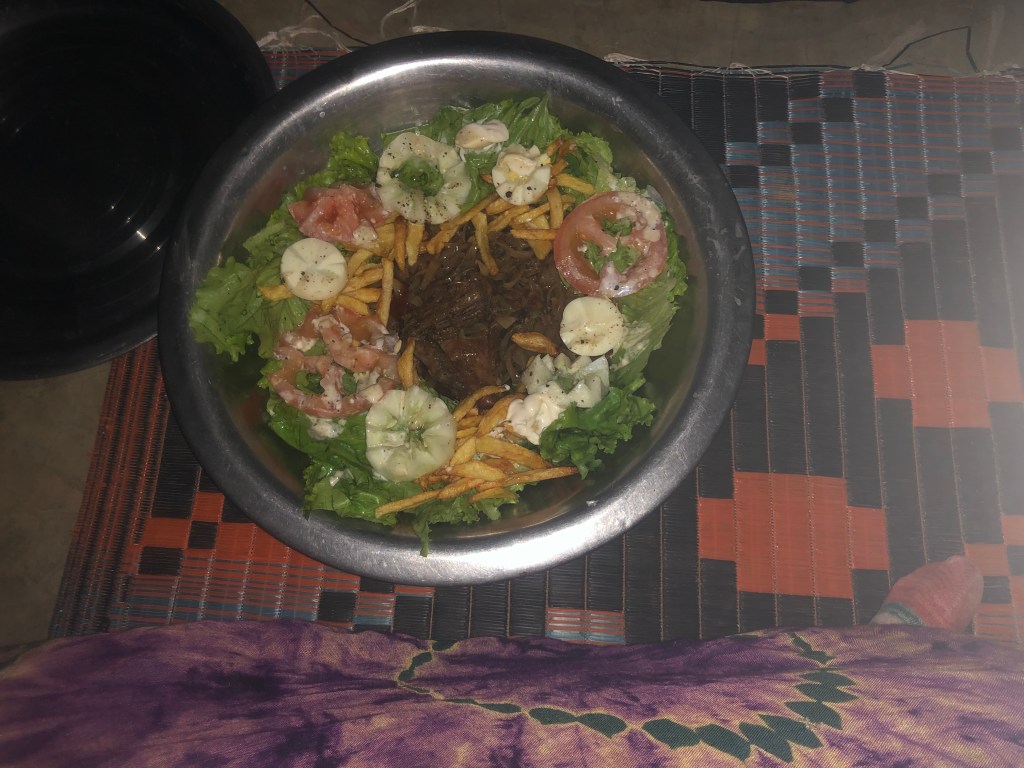
For New Years, I was invited to my site mate’s house for dinner. I was treated to a “luxury” dinner of salad–made with chicken, onion sauce, tomato, cucumber, French fries, and mayo. This was followed with a movie night and some Kraft mac and cheese. You could hear a few faint yells in the background as the clock struck midnight and that was the climax of the evening.

Our special New Year’s dinner

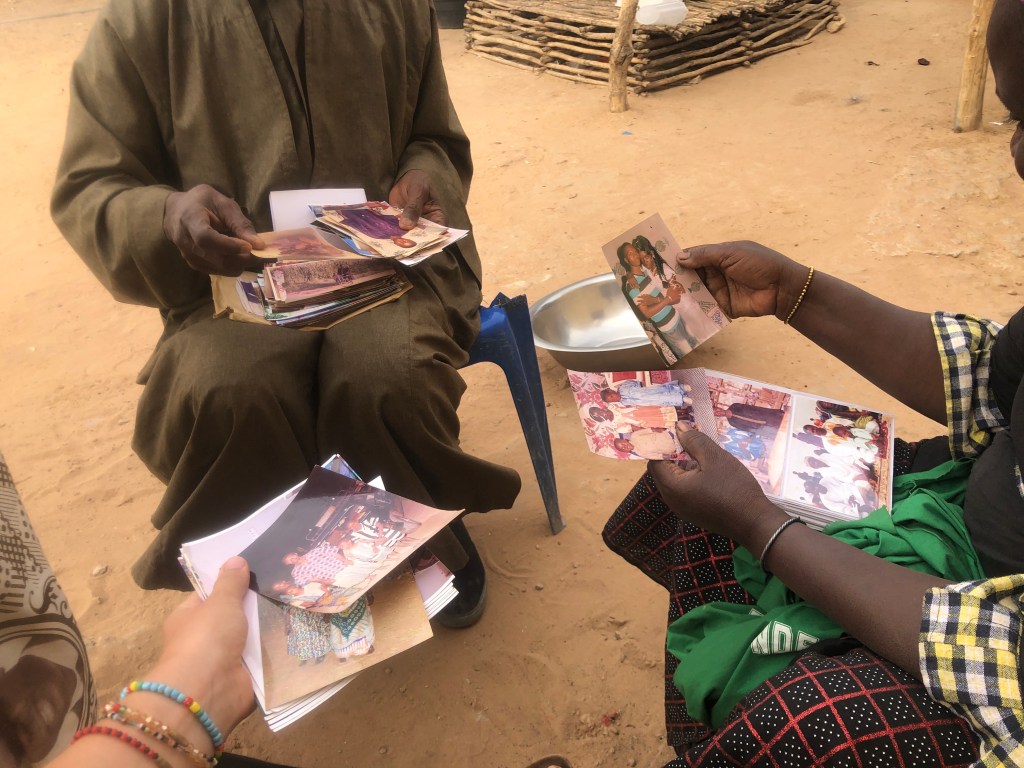
One of my favorite memories in the new year is my family pulled out a large collection of photos and photo albums, showing pictures from when my dad, one of my moms, and my oldest siblings were much younger. They also had pictures from previous volunteers, including the wedding of their first volunteer after she left Senegal. We sipped tea and laughed at their old memories, while one of my moms–Fati–did prep for dinner that night.

My dad Sara and my host mom Hoole going through photos with me.
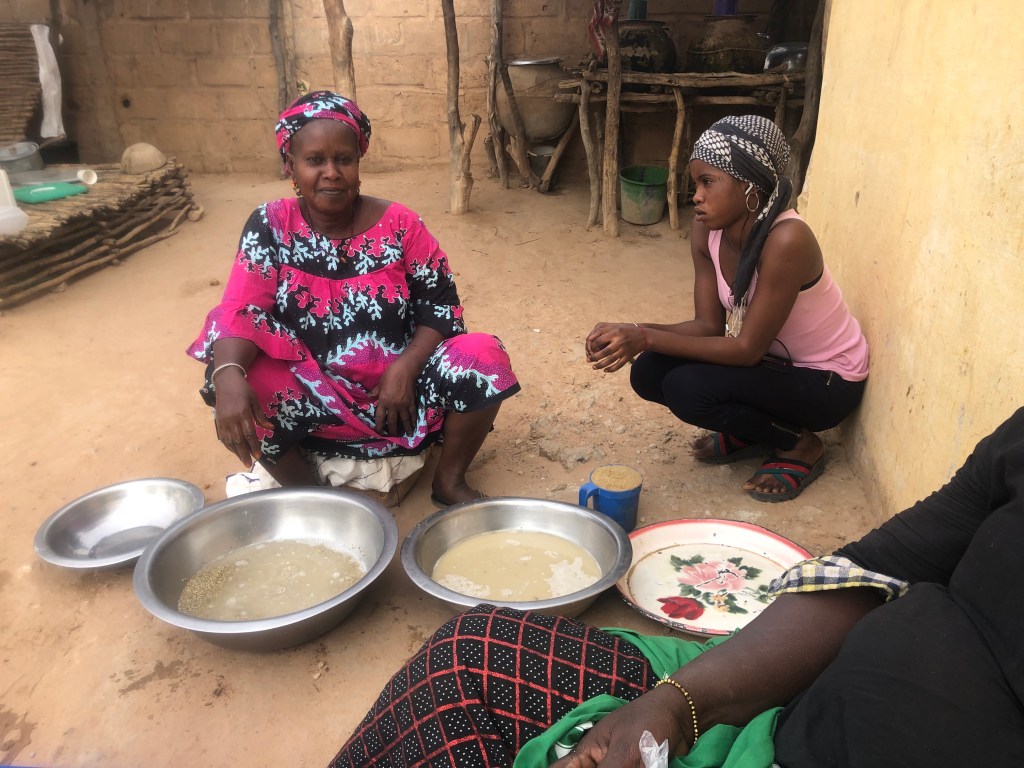
My host mom Fati and one of my sisters Hawa preparing dinner by washing millet that will then be pounded.

More recently, I went to Ourossogui for language seminar, which is four days of language classes held at one of my stage mate’s homes. The language seminar is structured around what us volunteers prioritize, which for us spanned from descriptives to verb extensions to conditional statements. It was an exhausting few days filled with great food, lots of English speaking, and an overwhelming but helpful amount of Pulaar learning.

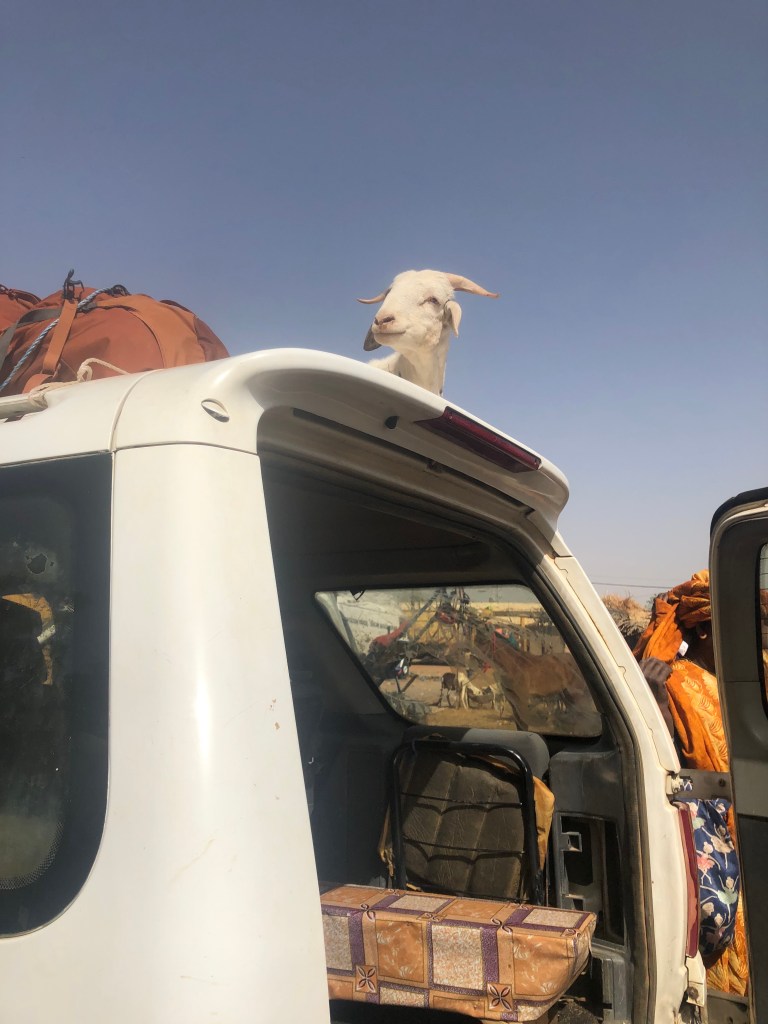
A sheep that rode on top of my car from Ranerou to Ourossogui. This is a very normal means of transportation for animals.
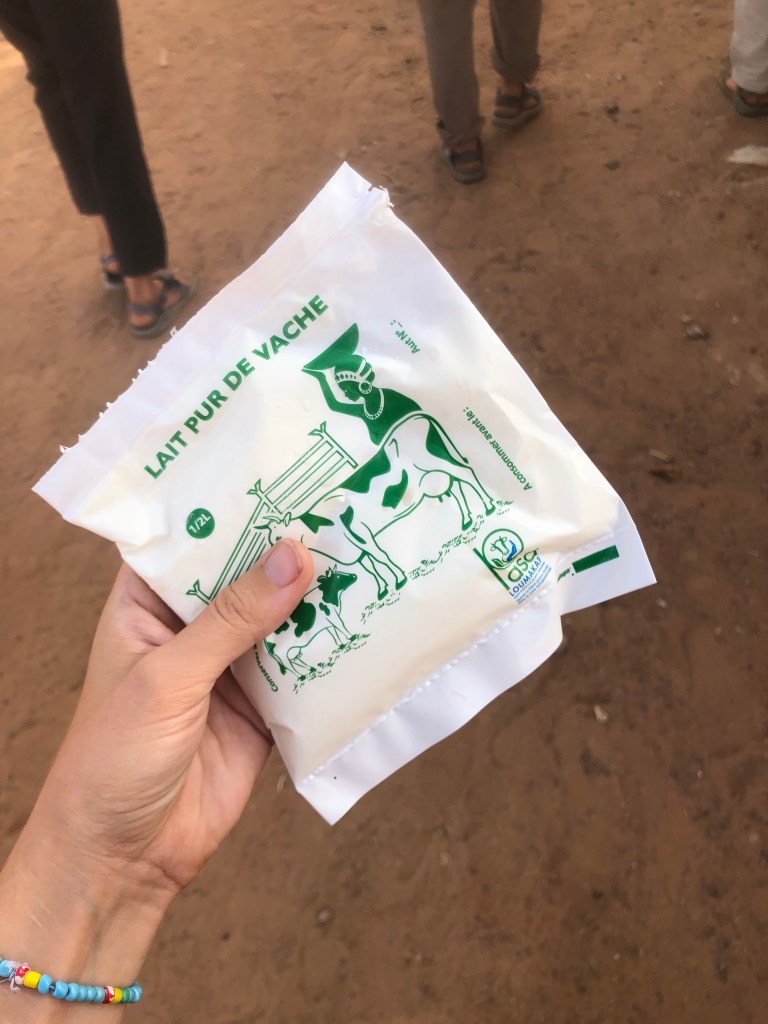
There is a women’s group that sells frozen kosam (sour milk with sugar), and it is delicious.
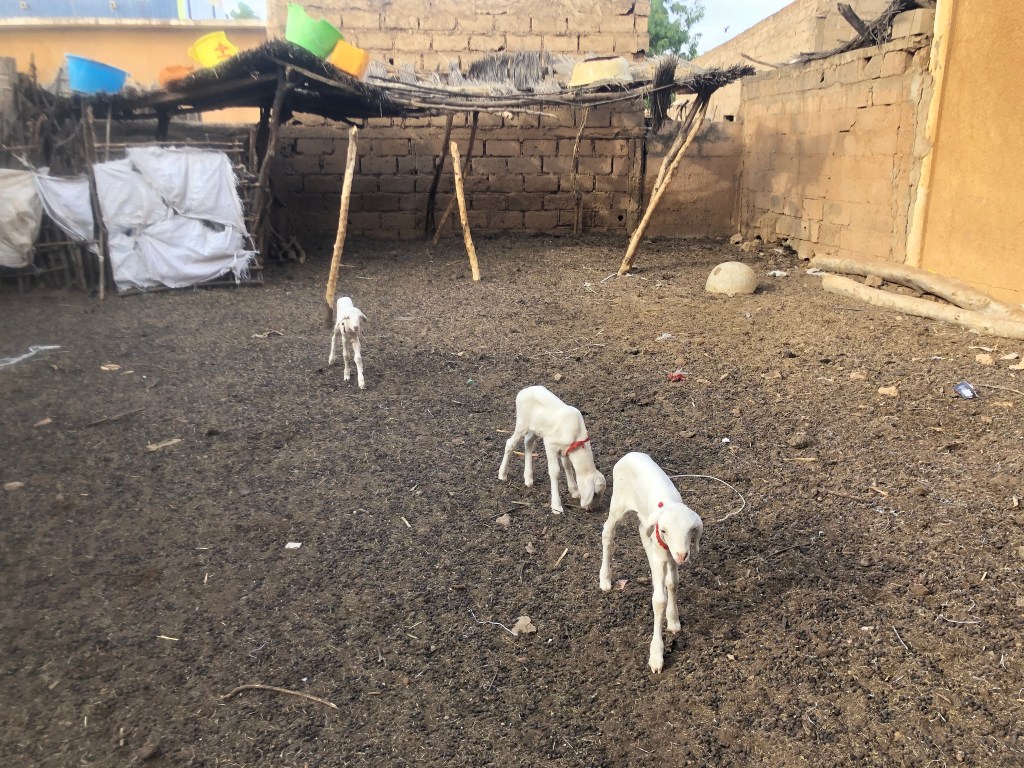
My stage mate’s compound had a brand new set of snow-white sheep triplets.
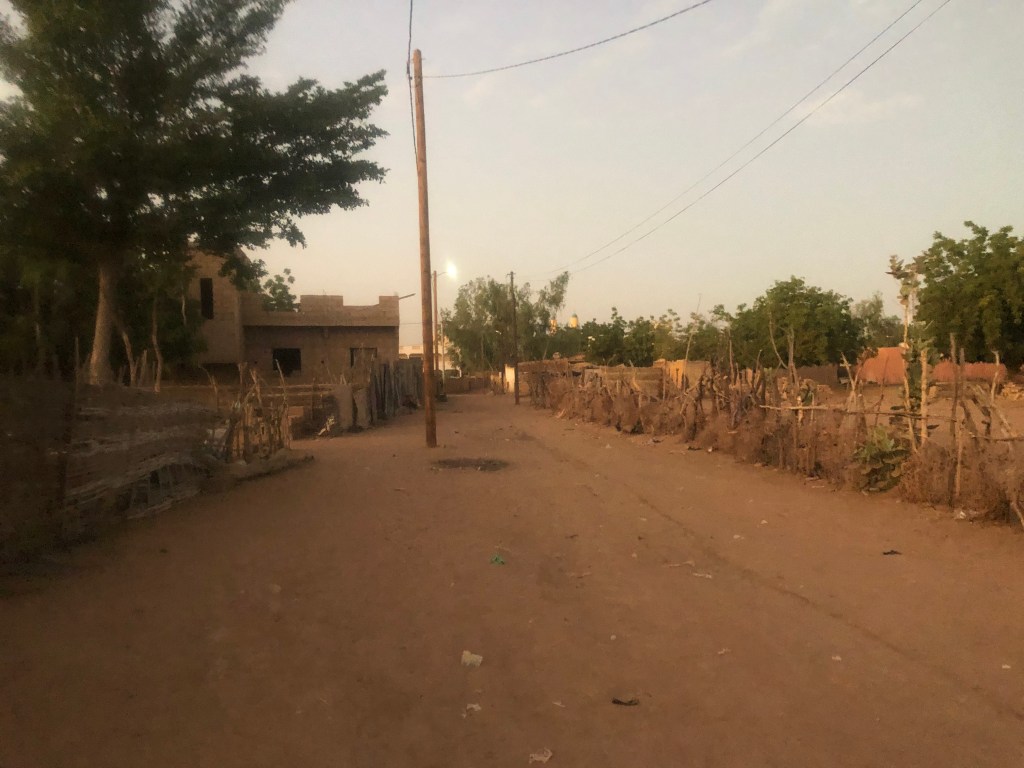
The road from my stage mate’s house towards the center of the city.
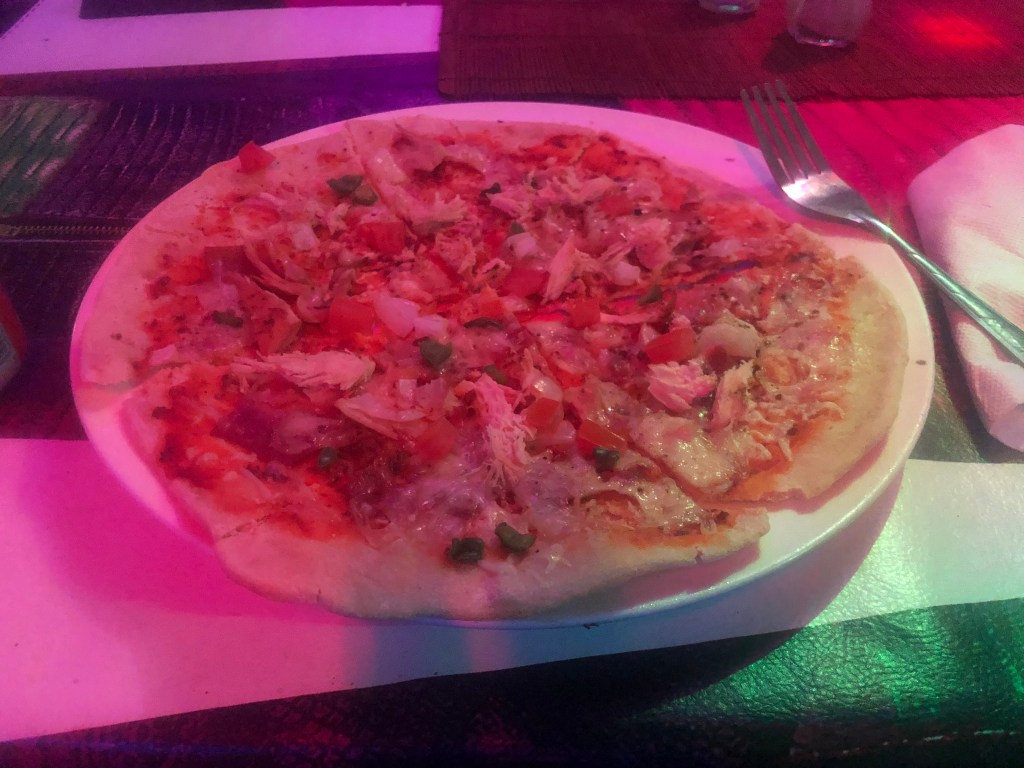
One night during training, we treated ourselves to food from a “fast food” restaurant, and this is the pizza I welcomingly devoured.

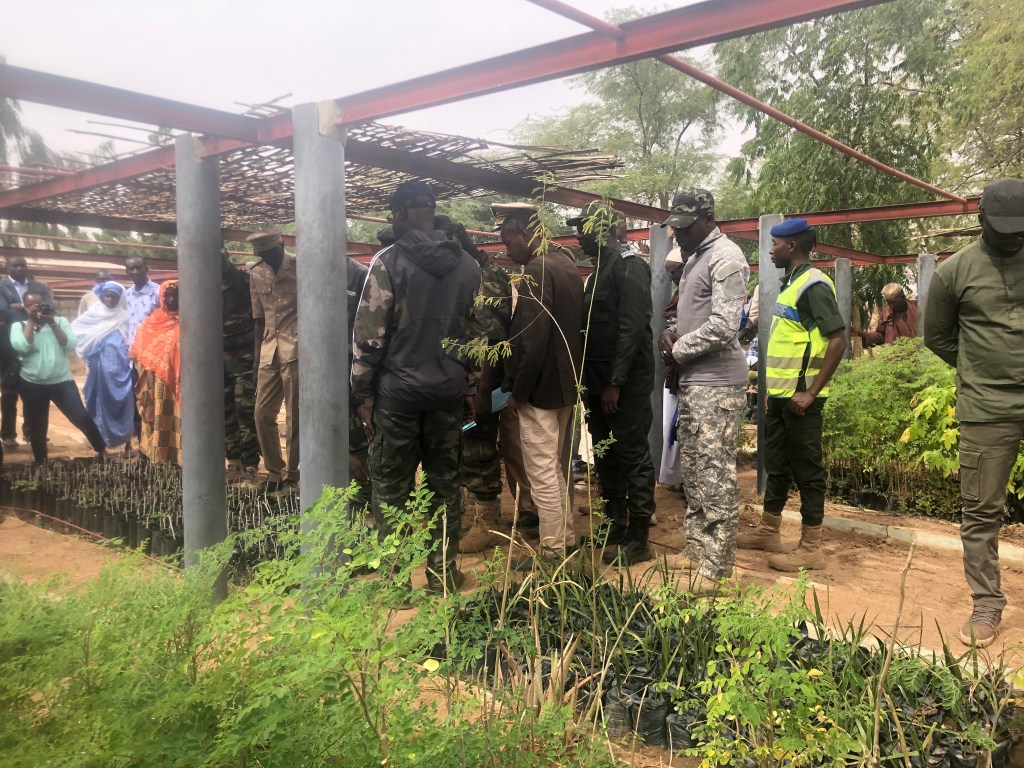
After, I returned to Ranerou from language seminar. I got to work completing several surveys for Peace Corps in preparation for Inter-Service Training (IST). On one of those days, the Senegalese Minister of Environment visited Ranerou where the students from the camp I mentioned before presented on their conservation pledges and local officials talked about their work.

The Senegalese Minister of Environment with several local officials at the Forest Service’s tree nursery in Ranerou.

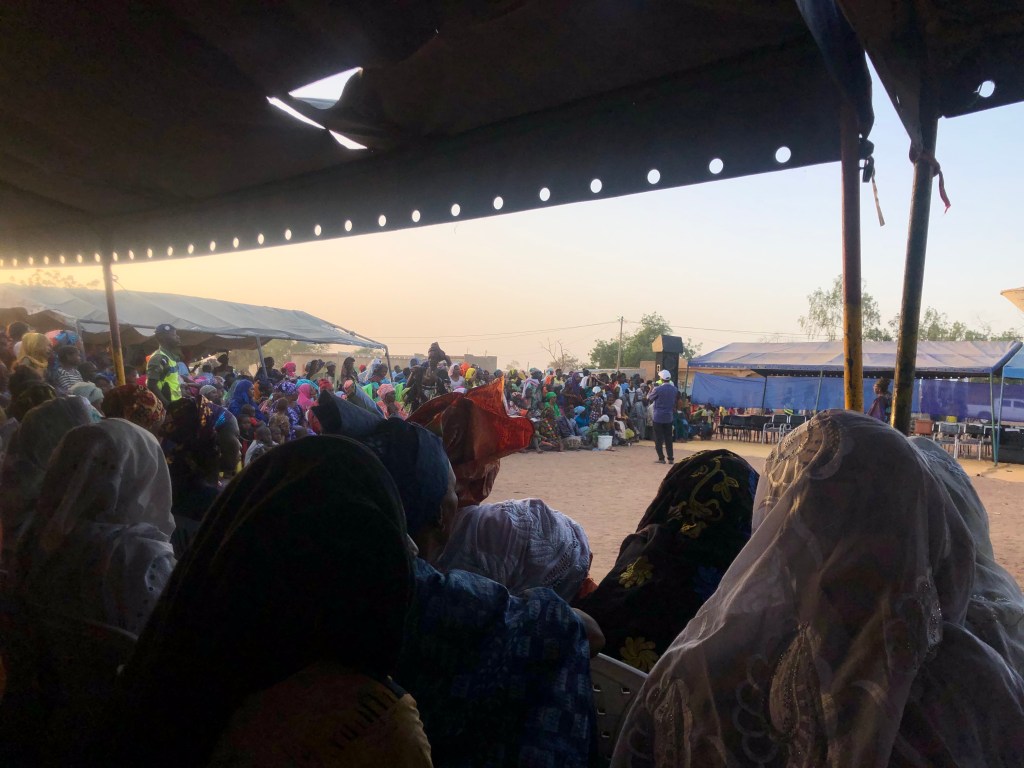
A couple days later, the Senegalese Minister of Women and Children visited Ranerou, and the town held a massive party for her. There were tents, music, and dancing. Several officials were presented and gave speeches. Afterwards, the Ministry provided supplies, such as lesos, buckets, and food, to women’s groups. The next day I departed to Dakar for some medical appointments and transiting to Thies for IST. I indulged in amazing food, coastal views, and time with friends.

As I mentioned, Ranerou held a massive celebration for the Minister of Women with tents, a lot of the town, and music.
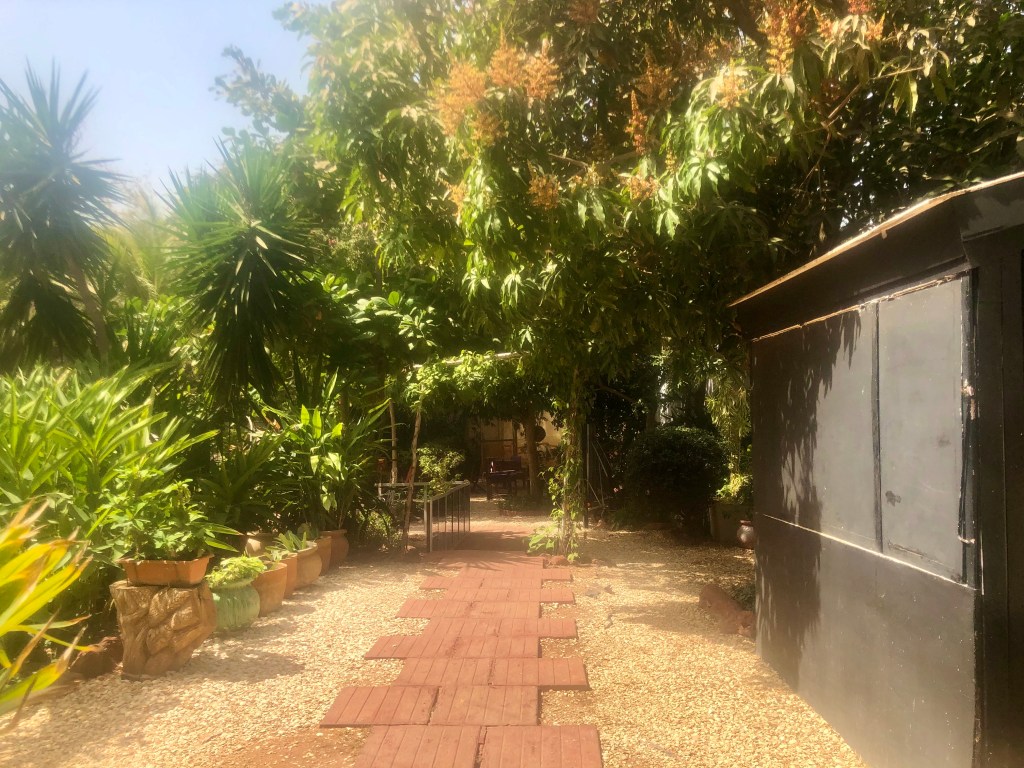
The garden of a restaurant that was founded by a Senegalese woman who spent several years in the US and used her time to learn how to create traditional American diner food.
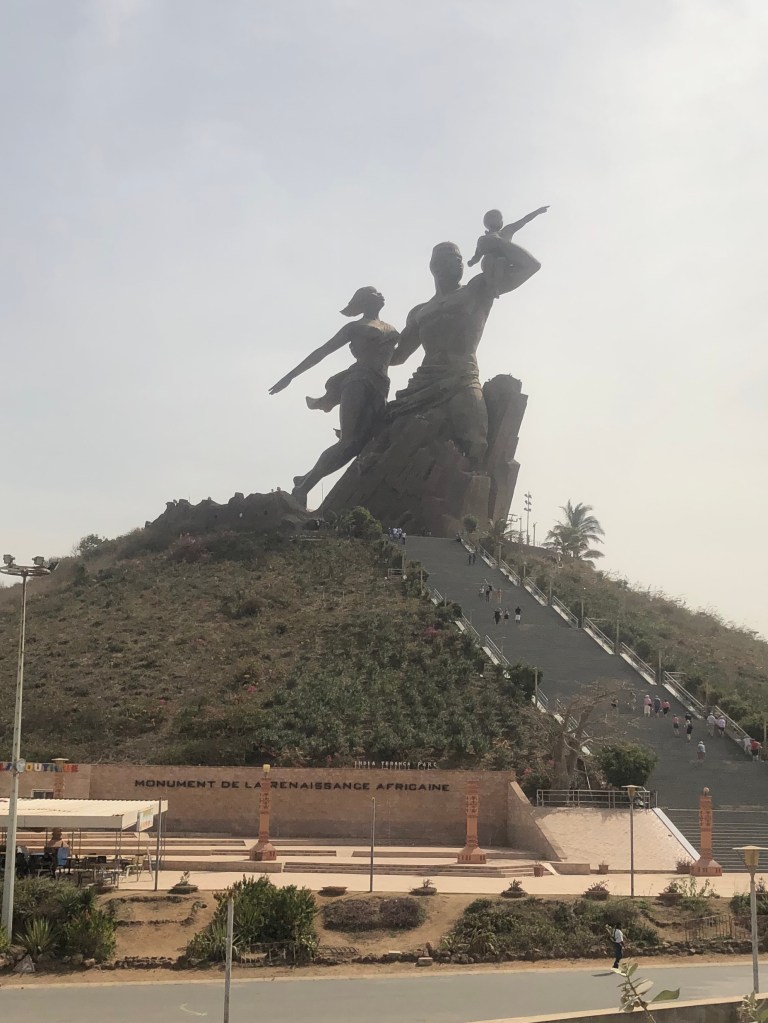
This is the African Renaissance Statue located in Dakar.
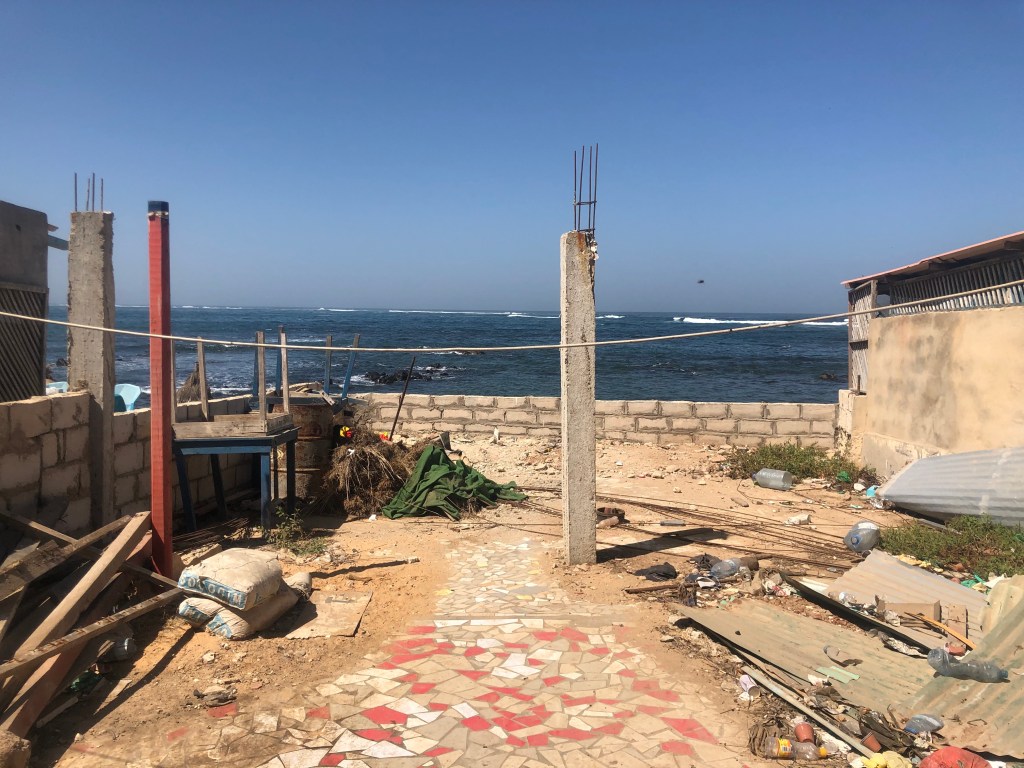
There is a strip of restaurants with spectacular seafood and ocean views less than a block away from the US Embassy in Dakar.

Now, I am heading to IST and look forward to another update in a month! I will try to include a cultural corner in every one of my updates from now on. Enjoy!

Cultural Corner

I wanted to start doing more blog posts about cultural aspects, but in all honesty, there is still so much for me to learn. I promise in the future there will be more in-depth ones. But, for now, we will begin with a little bit of information about names in the Pulaar ethnic group. There are three major sources for names: the Quran, one’s position within the house, and being named after someone else.

Whoever you are named after or shares the same name as you is your tokara, which I’ve mentioned in previous posts. Sometimes, complete strangers–upon hearing your name for the first time–will call themselves your tokara, which is normal and acceptable! You can even just call for people by saying tokara instead of their name.

Last names are as equally important as well for relationship-building and connections with others. In Senegal, there is a culture of “joking cousins,” which means that anytime you meet someone who is your joking cousin it is expected you will make fun of them. A big go-to joke is calling people beaneaters. Sometimes it can be as straight-up as saying someone eats a lot of beans to very complex jokes that involve fake-cooking beans and offering giant bags of fictional beans. Other people will say you don’t have a last name or it is a bad last name. One of the girls in my region had a guy tell her she was such a bean eater that her mother breastfed her beans as a baby. As I am a Jia, if I meet a So, it is expected that we make fun of each other. Other examples include Diallo’s and Kan’s joke with Ba’s.

Additionally, in Pulaar culture, even though its faded somewhat in present-day, there is a caste system. Last names are additionally associated with their caste. Ba’s are at the bottom as herders, while Kan’s are at the top as kings. There are other castes, such as warriors, religious leaders, and teachers. But, as my Pulaar teacher says, things are changing in Senegal and increasingly so with increased movement, the diaspora, and technology.

Installation and Integration

Hello everyone! I know I have taken too long to make this blog post, but it’s been a whirlwind month and a half. I spent two additional weeks with my CBT family, passed all my Peace Corps training exams, swore-in as an official volunteer, and have spent three weeks at my permanent site. 

As I said in an earlier blog post, I will do a blog post specifically on Senegalese families later, so I will touch more on my CBT family and permanent family then. For now, I will discuss installation and getting to site.

The week leading up to installation is chaos. Trainees take several exams for technical, medical, safety and security, policy, and—most stressfully—language proficiency. The days before the language exam involve hours of studying and panic from many, and it’s all for a 15 to 30 minute oral conversation. We take the exam only two days before the swear-in ceremony. The day after the exam there is a large reception for all of the CBT families with performances, speeches, and food. This also happens to be Thanksgiving, which we celebrated the night after the language proficiency exam, and some volunteers made a Thanksgiving feast (as much as one can in Senegal). Finally, there is swear-in day. 

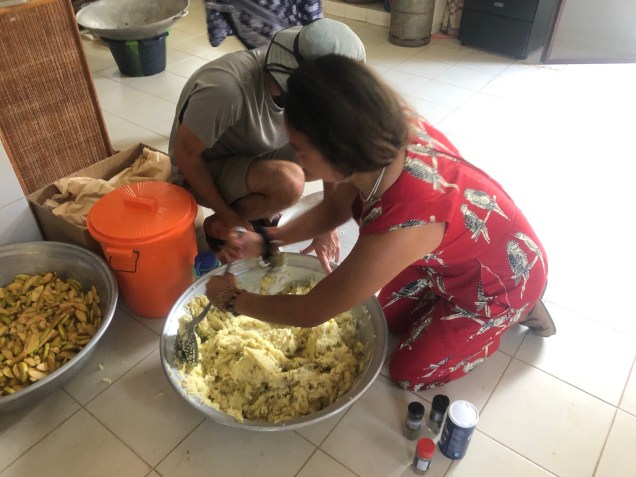
I was part of the mashed potatoes group, and this is how we attempted to mash enough potatoes for 70+ people. 
The two CBT groups in Mboro with one person from each of our families. The rainbow dress I’m wearing was a gift from my family. 

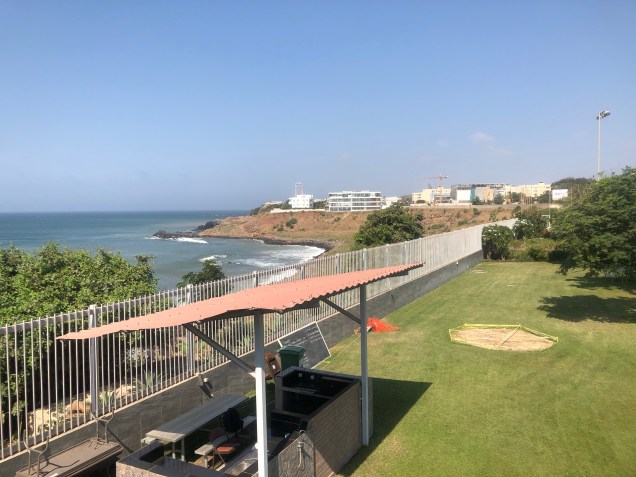
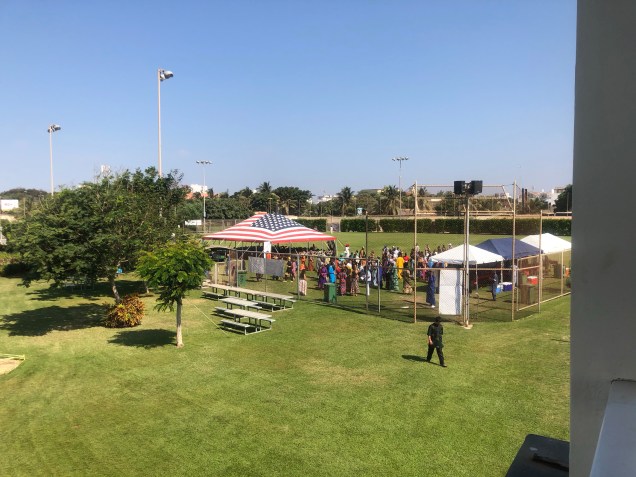
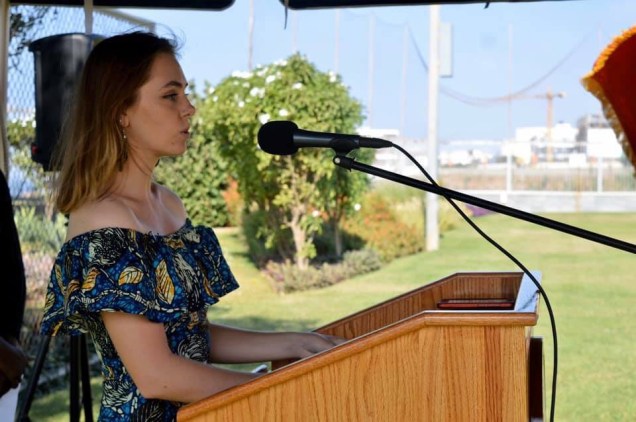
Peace Corps packs us all into megabuses at sunrise to head into Dakar. We go to a large field right on the ocean. The ceremony itself is only around a hour, which feels so short after ten weeks of training and anticipation. A variety of dignitaries give speeches from the Peace Corps, US Embassy, and the Senegalese government. But also one person from each language group—Wolof, Pulaar, Mandinka, and Serere—gives a speech in their local language. I was honored to give the speech for the Pulaar language group. At the end of the blog post, I will provide the transcripts of my speech both in Pulaar and English. After the ceremony, we eat tables worth of snacks and took pictures with the ocean background. 

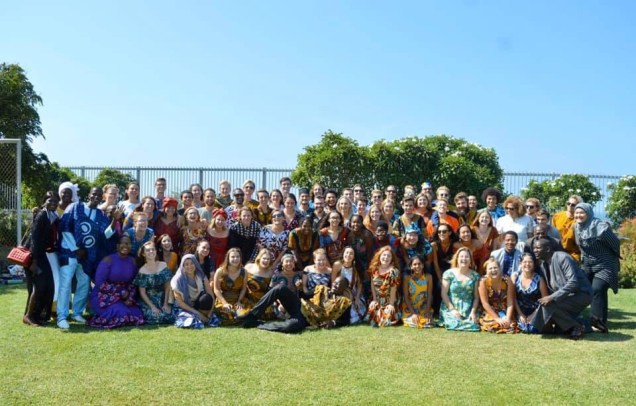
My entire stage with Peace Corps staff at the swear-in ceremony. 
The location of swear-in with an ocean view and a giant American flag tent.

After the ceremony, it was back to the training center in Thies and a final night for celebration. All of those sworn-in left early the next morning for our regional cities. We then spent three days there buying everything we might need for our rooms, like mattresses, trunks, paint, buckets, and more. Peace Corps allocates a specific stipend for purchasing these things, and usually volunteers throughout the region meet us in the city to help us purchase items and then move them. Then it’s onto our permanent sites for two years! 

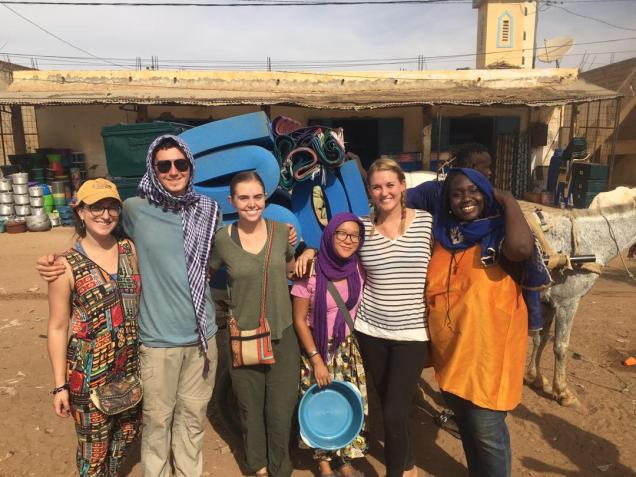
Myself and a few other volunteers in front of the “moving van” taking our mattresses and trunks to our hotel. 
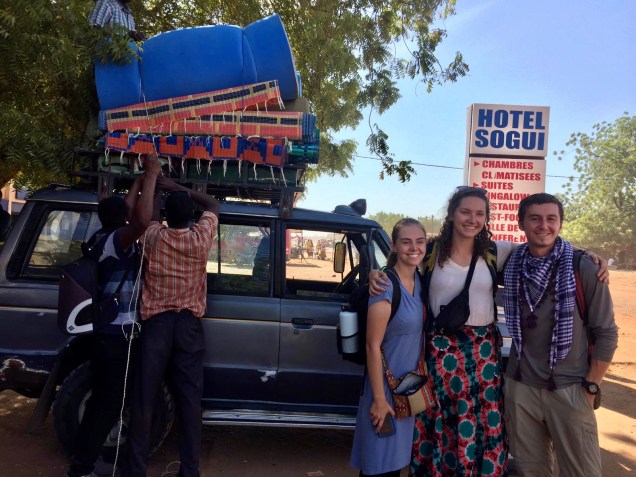
The new Matam volunteers before we head to our permanent sites with our cars packed to the brim with our new possessions. 

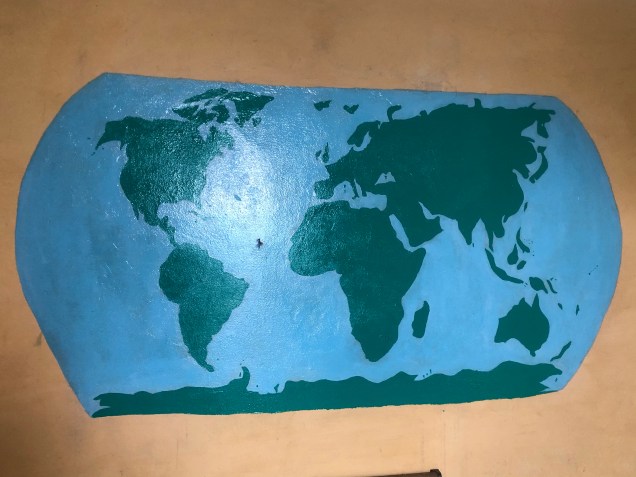
The past few weeks at site have been slow but good. I’ve primarily met with various government officials, seen a couple gardens, and spent a lot of time with my family. I painted a world map in my room, which I’ve used to teach some of my family geography. I’ve also pulled out the SkyView app on my phone and discussed astronomy with my family as we look at the stars some nights. It has been wonderful but not without its challenges. As it to be expected and normal during service, I came down with a stomach bug, so I was incapacitated for a few days. But I have focused on expanding my Pulaar vocabulary and learning. For now, there is not much to report on, but I will have a lot to discuss in the many coming months. Haa gonngal! 

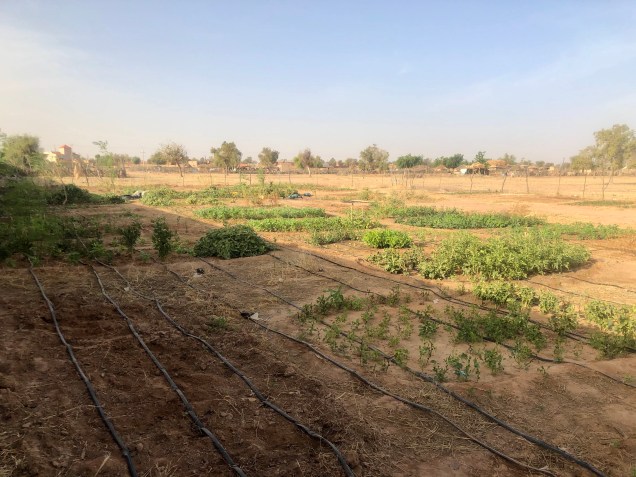
One of the various gardens I have visited. It is managed by a women’s group that consists of 40 women who use it for commercial and home use. 
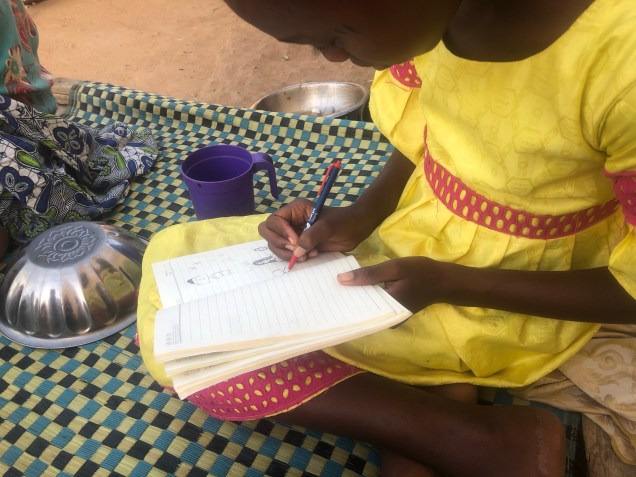
My sister Fati (she is my tokara, so we share the same name) drawing portraits of us in my Pulaar notebook.
The world map mural I painted in my room my first weekend at site and use to teach some geography to family members.
Sunset from the front of my house on my first night at site. 

Swear-in Speech

Me giving the Pulaar speech at swear-in.

Pulaar: 

Bismillah mon! Baandilraaɓe, sehilaaɓe, mi salmini gooto fof e innde mum e yettoode mum. Mi salmini jooɗanido do laamu Senegal. Mi salmini jooɗanido do laamu Amerik. Mi salmini mawɗo Corps de la Paix Cheryl Faye. Mi salmini wolunteeruji di.
Mbiyete mi ko Emily Ruhm e Amerik e Fati Sara Ja e Senegal. Mi hoɗat Ranerou. Ko mi wolunteer Corps de la Paix ndemateru.

Miin a wolunteeruuji njanngii Pulaar ngam leɓɓi ɗiɗi. Kadi Corps de la Paix jannginii min ko faate ndema e taariinde. Min parii ngam feccude ngal gandal e gure amen sabu Fulɓe mbii, “Ko gooto waawi fof, sappo ɓuuri.” Hamin njogi ko heewi ko min poti janngude. Kono mɓiɗo welti e koye amen.

Min gari Senegal jooni waɗi leɓɓi ɗiɗi e hamin mbaawi haalde Pulaar, Jolfe, Serere, Jahanke, e Mandinka (seeda, seeda). Maa min njah gure amen to min koɗata, liggoto, daanoto, e ngandata yimɓe woɗbe.

Webataa. Sikke alaa, maa min dañ caɗeele kono min pellitat (Inshallah). Min njanngat ko faate demde e piinal Senegal e kadi min njannginat ko faate piinal Amerik.

Min ngetoto safrude soklaaji gure amen. Maa min liggodo e reube, worbe, e sukaabe. Hamin keppi janngude, jannginde, e liggodaade e Senegalnaaɓe ɓe. Mɓiɗo heppi yihde ko min mbaawi waɗde ko fof.

Sakket, Pulaar wii, “So liingu ñaamii njumri yo yettu Allah e lawƴooɓe.” Ndeen non, hamin njetta jannginooɓe amen demde e kalla liggotooɓe Corps de la Paix fof. Onjaaraama jannginooɓe amen e yimbe fof.

English: 

Welcome! Family, friends, I will greet everyone first. I welcome the representative of the Senegalese government. I welcome the representative of the American government. I welcome the head of Peace Corps Cheryl Faye. I welcome the volunteers. 

My name is Emily Ruhm in America and Fati Sara Ja in Senegal. I will live in Ranerou. I am an urban agriculture Peace Corps volunteer.

The volunteers and I have studied Pulaar for two months. Also, Peace Corps has taught us about agriculture and environment. We are ready to share this knowledge with our villages because the Pulaar people say, “What one can do, ten do better.” We have a lot to learn. But I am proud of us.

We came to Senegal two months ago and now we can speak Pulaar, Wolof, Jahanke, and Mandinka (a little). We are going to our villages where we will live, work, sleep, and meet new people.

It won’t be easy. We will have problems but we become stronger (Inshallah). We will learn about Senegalese language and culture, and also we will teach about American culture.

We will try to address our villages’ needs. We will work with women, men, and children. We are excited to learn, teach, and work with the Senegalese. I am excited to see all that we can do.

Last, Pulaar says, “If a fish eats honey, it has to thank Allah and dishwashers.” With this, we thank our language teachers and all of the Peace Corps staff. Thank you to our teachers and everyone. 

Adjustment

Hello everyone! It’s been about a month since my last update. Since then, I have spent two weeks on and off with my host family in Mboro for Community Based Training (CBT). Additionally, we had site reveal day during which I learned my permanent site where I will live for the next two years beginning in December after Installation! I spent three days there as well as a day in my regional city, meeting the other volunteers in my region. On site reveal day, there is a large map of Senegal on the basketball court at the Training Center where they have everyone go and put on blindfolds. Then other volunteers and staff members weave you through the map, taking you in circles to disorient you. My language teacher Fatimata led me to mine.

My permanent site is…

Ranerou, Matam!

Me sitting on the map of Senegal where Ranerou is located.
Image may contain: 2 people, people smiling, people standing, tree and outdoor
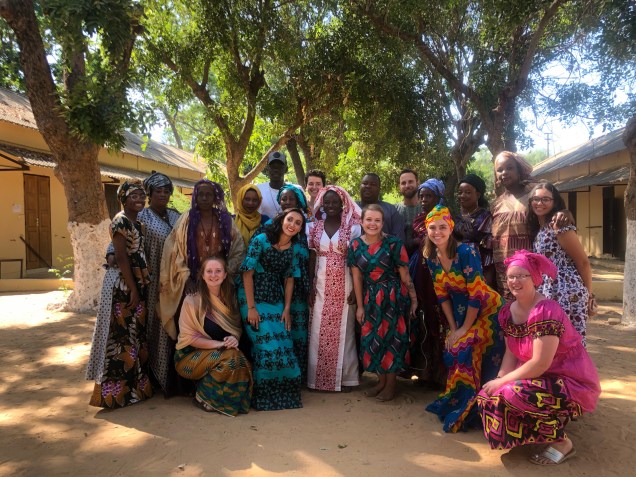
Site Reveal Day: The four new volunteers, including myself, who are assigned to the Matam region.

Ranerou is a road town along one of the routes nationales. The population is around 4,500 people, which seems to be outnumbered by sheep and goats. Where I am in the North (Fuuta in Pulaar), the primary source of income and employment is animal husbandry and herding. It has a savannah climate with green foliage during the rainy season (July to October) and brown the rest of the year (November to June). Ranerou is located between the Reserve du Fanue du Ferlo-Nord and the Reserve du Faune du Ferlo-Sud. I have been told that various wildlife lives in these reserves, including gazelle, camels, and large cats.

A map of the national reserves in Senegal with Ranerou on the map (Source: http://vacationsdream.com)
A baby sheep that was born my first night in Ranerou with its mother.

Because of the wildlife reserves and Ranerou being the county capital, there is a large government presence with a mayor’s office, the Gendarmerie (police), the Prefect, Eaux et Forets (National Forest Service), and more. Additionally, as a result of the resources at my site as well as a desire for continuing partnerships, my site has had several volunteers over the years from most sectors (Agriculture, Community Economic Development, and Health).

Me with another volunteer who lives in Ranerou (right) and the volunteer who guided me through my visit and is located in my region (left)

Like my CBT family, my permanent site family has had volunteers before. All of whom they have given Senegalese names and welcomed into their home. My family has renamed me Fati Sara Ja, which is the name of one of my sisters as well as the first name of one of my host moms. (As an predominantly Muslim country, polygamy is common. I will do a more in-depth dive on families in a later blog post). In Senegal, one is usually named after someone else, such as other family members, friends, or community members. It is seen as an honor to have someone be named after you. If someone is named after you, then you are their tokara. This means that my sister and mom are both my tokara.

I am so excited to begin to develop relationships with my community and family over the next two years. For now, I’m back to CBT on Wednesday for two more weeks, and then a week before Installation! Until next time/Haa jonngal!

The sunset my first night in Ranerou

Asalaam Maalekum!

Peace be with you! It’s been a little over a week since my arrival in Senegal, so I thought it was time to post my first blog post in-country! This week has been a whirlwind that feels as if it has lasted several weeks at this point. We have learned all about what the next 9 weeks of Pre-Service Training (PST) will entail, including language and technical training, living with a host family, and a lot of cultural engagement. 

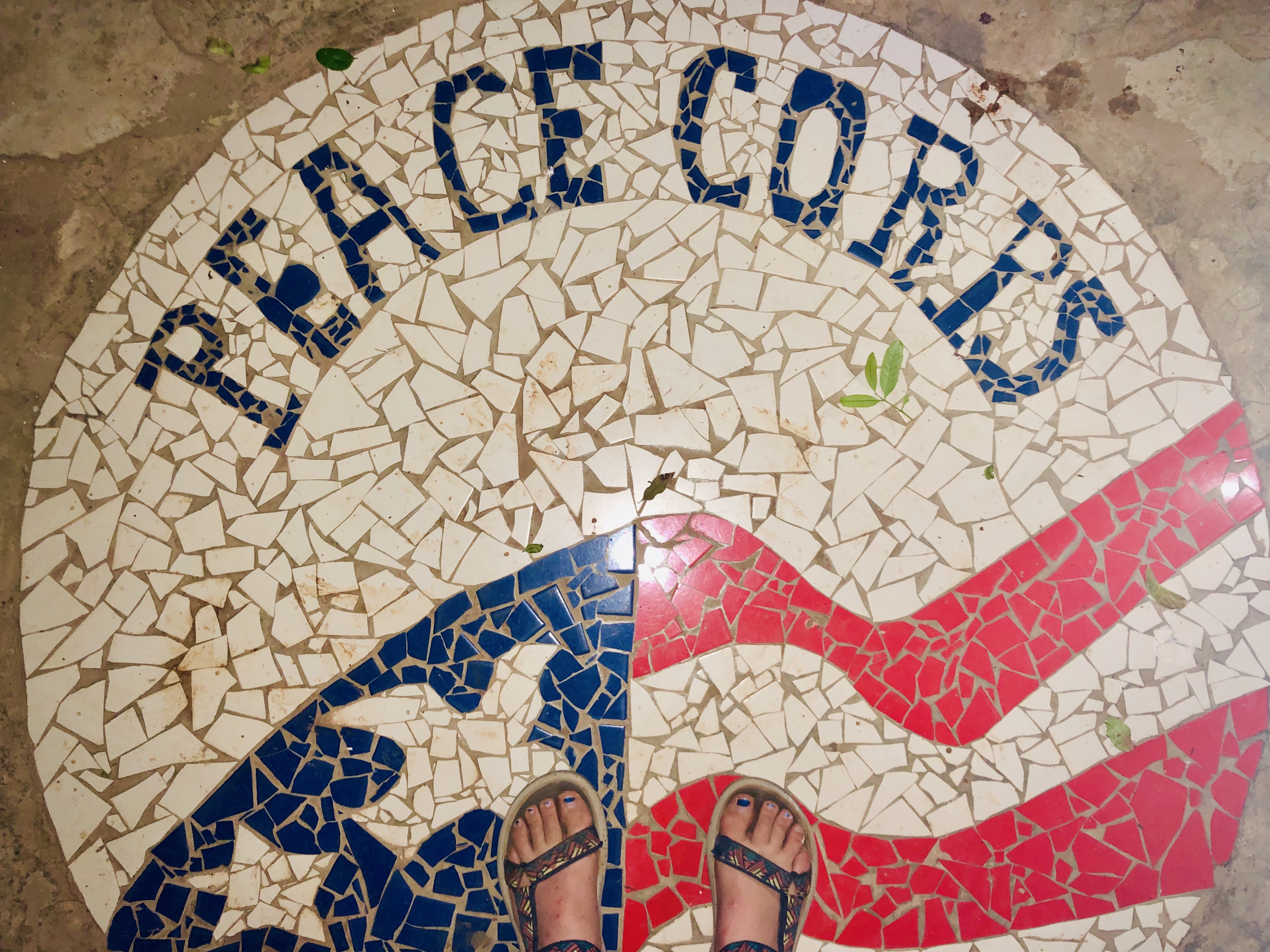
The first of many pictures of my rainbow sandal travels
The Peace Corps Training Center Welcome Sign

On Monday, after a very long and thorough medical class and presentation, we learned what language we’ll be learning during training and will be the language we will speak in our communities for the next two years. Mine is…

On Monday, after a very long and thorough medical class and presentation, we learned what language we’ll be learning during training and will be the language we will speak in our communities for the next two years. Mine is…

Pulaar du Nord!

I am incredibly excited to be learning Pulaar with my first classes this past Tuesday. Pulaar is spoken throughout West Africa in Mali, Mauritania, Ethiopia, Cameroon, Guinea, Guinea-Bissau, The Gambia, and more! Pulaar is not the most common language in Senegal, which is Wolof, but Peace Corps teaches three dialects of Pulaar in Senegal. My dialect is primarily in the North but is also spoken in Central Senegal. I can’t wait to learn more about Pulaar throughout my training and service. 

A map of Senegal that shows the general groupings of languages throughout the country and is nowhere near comprehensive.

On Wednesday, we moved in with our first host family, which is located in Mboro, who we will live with on and off during our PST. We will then be assigned another family for our permanent site (where I will live after installation for two years). Mboro is a beach town, and you can bet I’m excited to see the famous beaches of Senegal. 

Now it’s time to focus on that language training! Haa gonngol!

Introduction to Me

Hello, my name is Emily Ruhm, and welcome to my blog! I am serving as a Peace Corps Volunteer (PCV) in Senegal, working in urban agriculture, from September 2019 to November 2021.

I am from Ellicott City, MD, but I grew up living on and off overseas as a result of my parents serving in the US Foreign Service. My parents met in North Africa, so I excited to return to the continent where my life started.

My journey to Peace Corps has been a long one–precisely four years since I began considering Peace Corps. It started in the summer of 2015 when I interned with the US Agency for International Development (USAID). It was here that I realized I wanted a future in international development (with Peace Corps being one of the potential paths). Since then I have completed two more internships in international relations, graduated with two degrees, submitted four Peace Corps applications, participated in three interviews, and received two offers. Originally, I was supposed to serve as a Peace Corps Community Economic Development volunteer in Albania from January 2019 to April 2021. However, medical issues prevented me from going, so I ended up where I am currently, teaching English in China for the past six months. Now I am back on the path to Peace Corps, departing for Senegal in one month.

I will update my blog throughout my service as a PCV. I hope you enjoy reading it!


PS: In reference to the blog name, I purchased a pair of rainbow Teva sandals in preparation for my departure. I had been wondering what to name my blog, and my boyfriend jokingly made a reference to my new shoes. So we ended up with this name! In homage to the blog name, I will post pictures of my rainbow sandals throughout my time in Senegal.